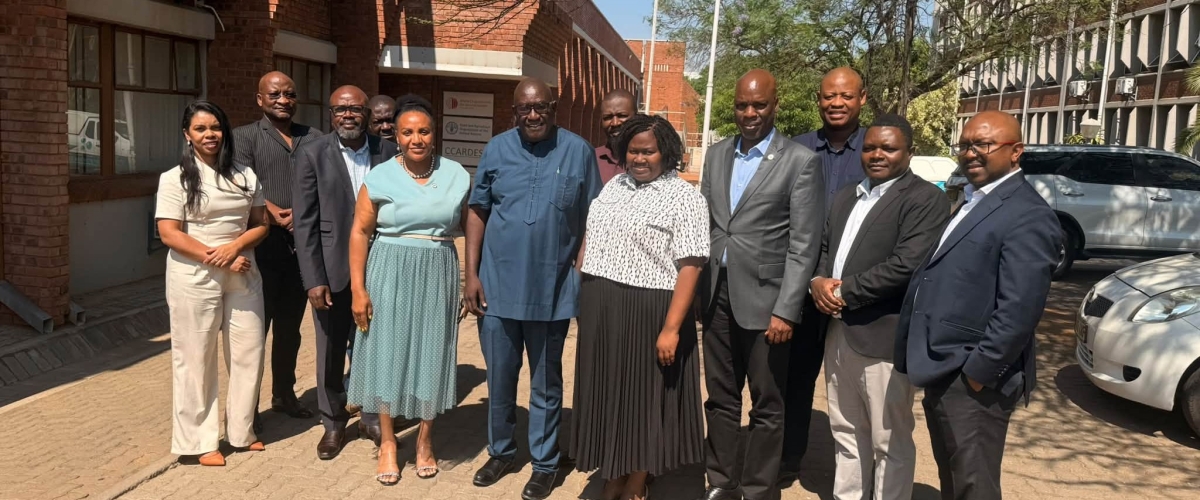
Meeting at the CCARDESA Secretariat in Gaborone, the three institutions identified opportunities to connect research, technology, knowledge management and policy more effectively. They agreed to pursue more structured engagement through institutional focal points, regular coordination and joint planning.
The meeting brought together SADC FANR Director Fahari Gibert Marwa, CCARDESA Acting Executive Director Mr. Dagmore Tawonezvi, and FANRPAN Executive Director Dr. Tshilidzi Madzivhandila, accompanied by technical staff from their institutions.
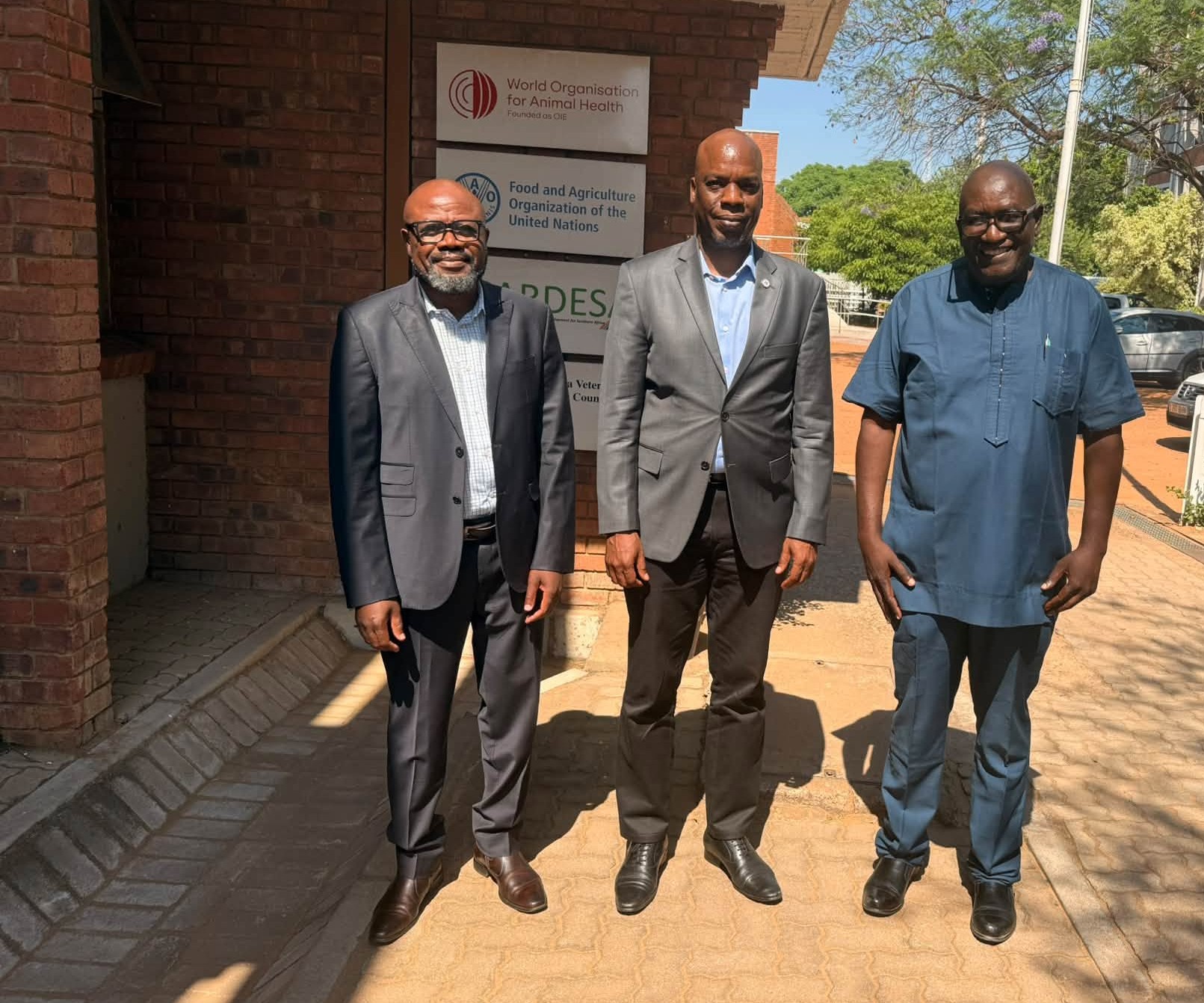
In his opening remarks, Mr. Tawonezvi highlighted the opportunity to increase the dissemination and use of agricultural technologies that remain underutilised. He noted that CCARDESA’s knowledge management platforms provide an important foundation for sharing knowledge products, while early warning information can support timely decisions across Member States. He emphasised CCARDESA’s role in supporting policy alignment with the SADC Secretariat and identified technology generation and dissemination, knowledge management, policy support and resource mobilisation as important areas for collaboration.
Mr. Tawonezvi also called for a more strategic approach to joint resource mobilisation, noting that the changing donor landscape requires institutions to work more closely together. Collaboration with SADC, as the regional umbrella organisation, would help align funding efforts with shared priorities.

Dr. Madzivhandila thanked the SADC Secretariat for convening the meeting and CCARDESA for hosting it. He highlighted the persistent disconnect between research, science and policy, stressing the need for deliberate institutional cooperation. “We collaborate ad hoc, but not intentionally,” he observed. He called for formal engagement arrangements that would connect the institutions’ complementary strengths. FANRPAN’s contribution, he explained, includes evidence-based policy research and analysis, convening policy dialogues, policy advocacy and capacity strengthening in climate-smart agriculture, food systems, natural resources and the environment.
These functions offer opportunities to connect policy processes with CCARDESA’s research coordination and knowledge management work. Dr. Madzivhandila also highlighted trade and markets as an area for cooperation, including engagement with opportunities under the African Continental Free Trade Area.
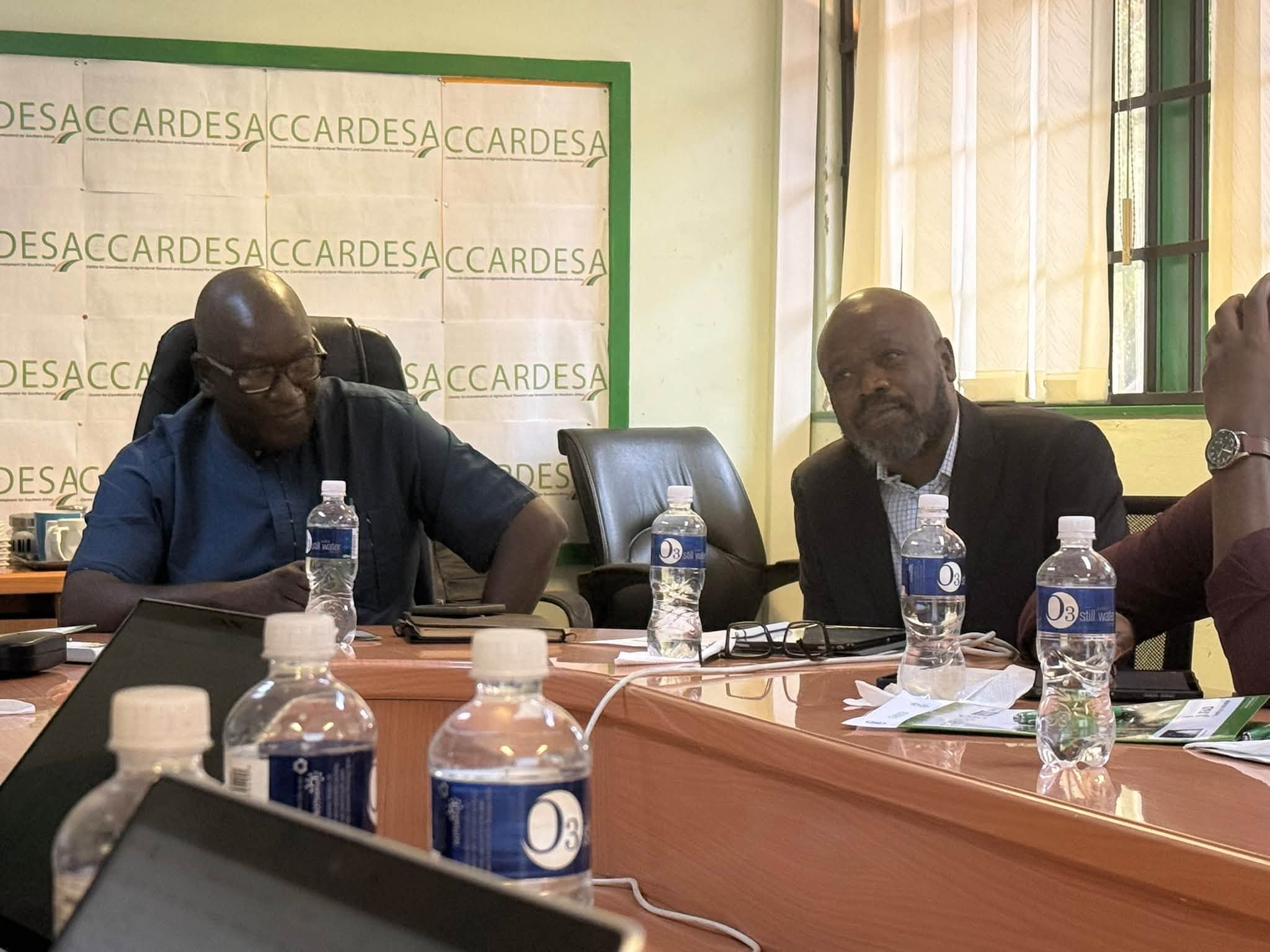
Director Marwa outlined SADC priorities under the Regional Indicative Strategic Development Plan (RISDP), providing a framework for identifying where the three institutions could contribute jointly. He emphasised the connections between their mandates and the importance of concluding discussions with clear actions and timelines.
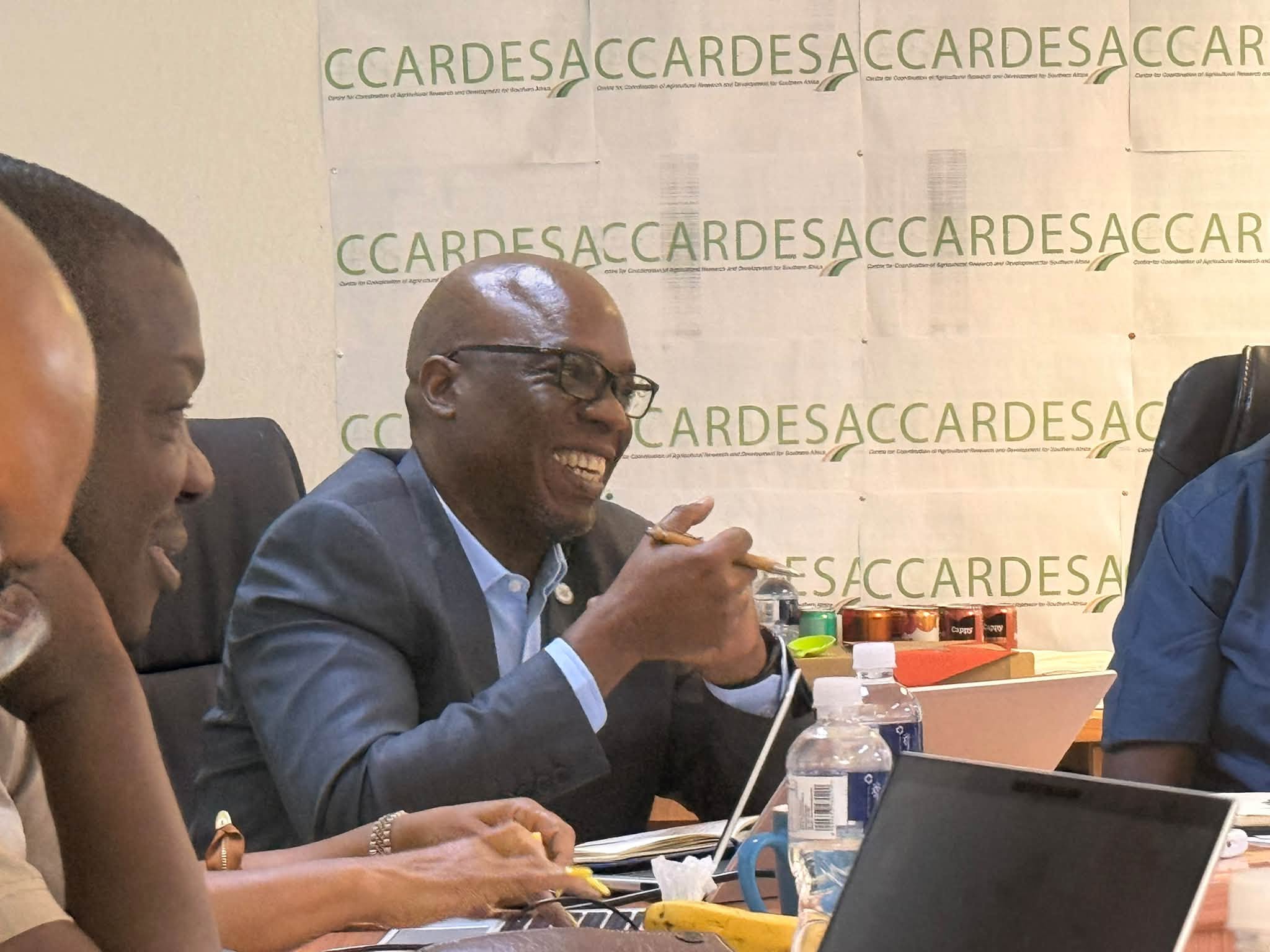
Priority areas included implementation of the Regional Agricultural Policy, agricultural information management, seed systems, sanitary and phytosanitary measures, plant health, fertiliser and soil health, and livestock disease management.
On fertilisers, participants explored opportunities for research and policy analysis to strengthen quality assurance, market information, affordability, and timely access. They also discussed examining models for regional bulk procurement to inform future approaches.
Agricultural information systems emerged as another area for cooperation, with opportunities involving digital climate advisories, technology catalogues, mobile platforms, and the dissemination of nutrition information. Discussions also covered seed policy harmonisation and support to national seed systems.
For livestock, participants considered collaboration on animal health, including foot-and-mouth disease, through policy briefs, institutional capacity strengthening and improved dissemination of information.
The meeting also addressed natural resources and wildlife, fisheries, biodiversity, tourism, and Transfrontier Conservation Areas. Participants recognised the links between these sectors and food security, nutrition, sustainable livelihoods, and regional development, including opportunities involving aquaculture, agritourism and indigenous food systems.
Climate change adaptation and mitigation featured prominently. Director Marwa stressed the need to mainstream adaptation into action plans, while discussions identified opportunities for cooperation on agroecology, community resilience, livestock greenhouse gas emissions and sustainable land management.
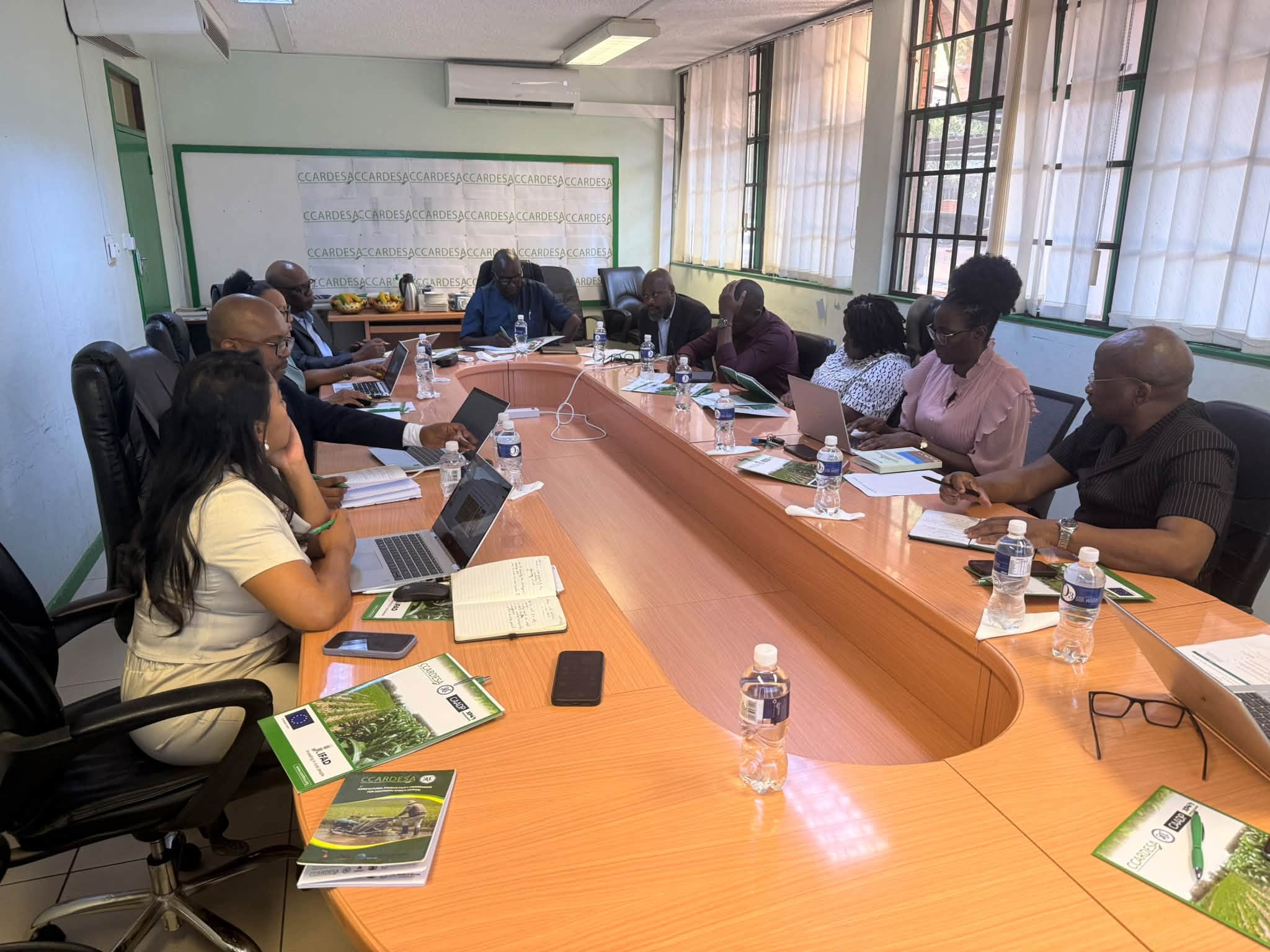
CCARDESA’s assigned leadership of Pillar 5 of the SADC Great Green Wall Initiative was highlighted as a platform for advancing coordinated action on land degradation, desertification, and the effects of drought. Participants also explored how agroecology research, policy studies and stakeholder engagement could support regional climate and development priorities. To sustain the collaboration, the institutions identified focal points: Dr Shepherd Muchuru and Mr. Colum Zhuwau for SADC FANR; Dr. Bridget Kakuwa and Dr. Majola Mabuza for CCARDESA; and Dr. Sithembile Mwamakamba and Mr. Suwilanji Sinyangwe for FANRPAN. The strengthened partnership aims to bring regional research, knowledge and policy expertise into closer alignment, translating shared priorities into coordinated action for Member States and farming communities across Southern Africa.