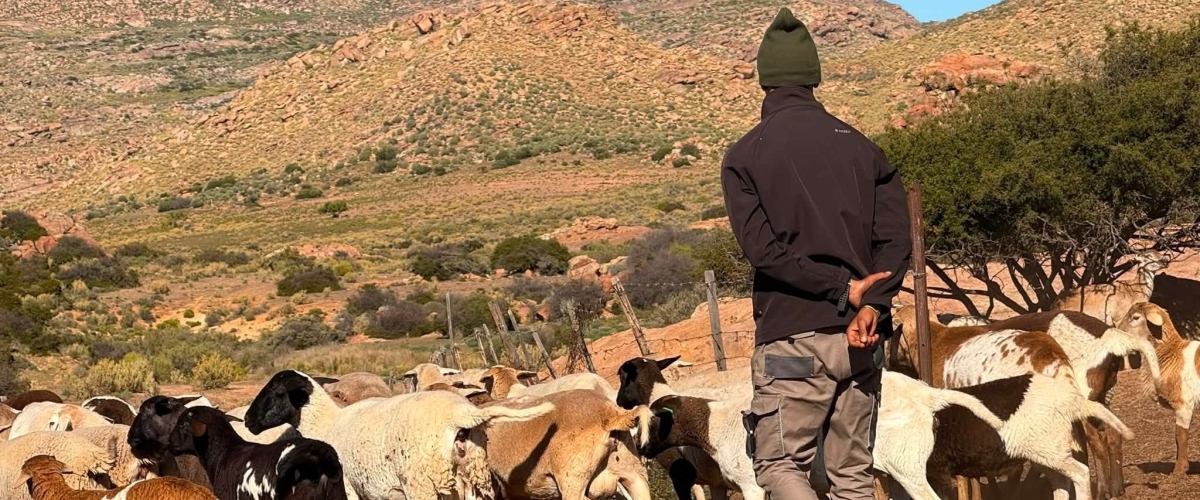
The field visit formed the second day of the third International Climate Initiative (IKI) Growing Greener Regional Project Steering Committee programme. Participants travelled from Springbok to Nourivier, where they engaged farmers about their livestock, cooperative structures and experiences with the Herding for Health programme before visiting restoration sites and the Rooifontein kokerboom or quiver tree forest.
Reflecting on the importance of the visit, Mr Barney Kgope of South Africa’s Department of Forestry, Fisheries and the Environment, said the field engagement enabled regional stakeholders to connect project planning with the realities experienced by communities. “The field visit allowed us to move beyond reports and presentations and see how Herding for Health is being implemented by farmers. We saw that rangeland restoration is not only about rehabilitating the land; it is also about strengthening community institutions, improving livestock health and supporting resilient rural livelihoods,” Mr Kgope said.
The Nourivier grazing area covers approximately 16,300 hectares within the wider 192,000-hectare Leliefontein communal area. Stewardship farmers collectively manage approximately 571 sheep and 464 goats within this extensive rangeland system. In Nourivier, Conservation South Africa (CSA) maintains a conservation agreement with the Vooruitkyk Koöperasie, meaning the Looking Ahead Cooperative. The cooperative has 19 members, 16 of whom participate in the Herding for Health programme, including eight women.
The partnership combines rangeland restoration with practical support for livestock producers. Programme participants employed through initiatives such as the Social Employment Fund and the Youth Employment Scheme undertake land-rehabilitation work and assist stewardship farmers with cleaning kraals, dosing livestock and performing other routine farm-management tasks. “The programme connects environmental restoration with employment and practical support for farmers. This makes restoration part of the community’s daily economic and social life rather than a separate conservation activity,” CSA Restoration Manager, Mr. Malherbe Rossouw said.
Community workshops on holistic livestock management have begun developing two important planning tools: livestock reproduction and health-management plans, and rangeland management plans. The rangeland management plans provide a foundation for preparing detailed grazing plans.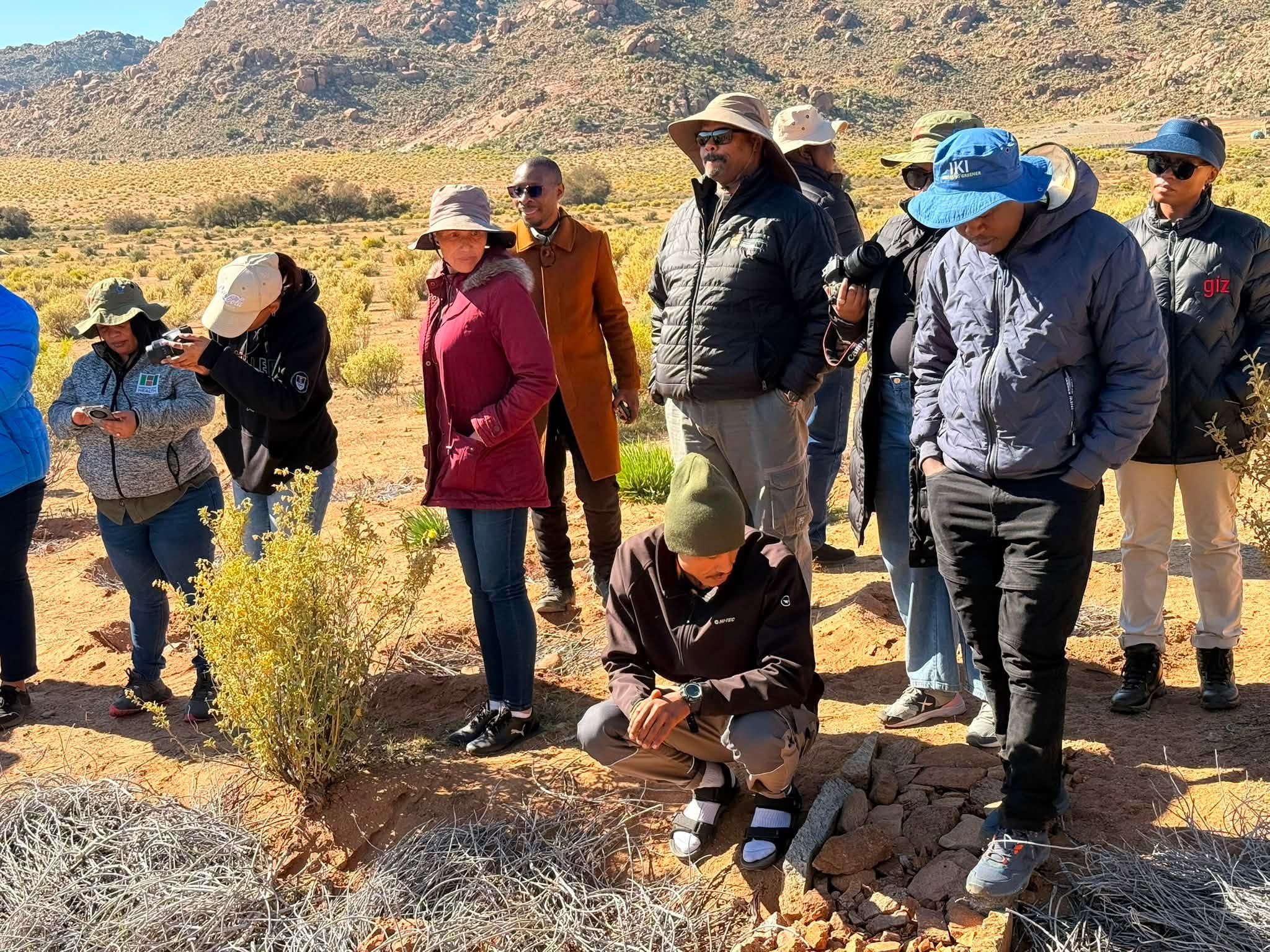
Six communities, including Nourivier, have completed both management plans and are ready to proceed to grazing planning. The process enables farmers to align herd health, breeding decisions and the use of communal grazing resources while drawing on local experience and technical guidance.
During the farmer engagement, Mrs Rosina Cloete shared the story of a community cooperative formed in 2012 by residents who wanted to farm and cultivate the land. Although the group was formally registered, it encountered several obstacles and later began keeping goats. In 2019/20, the cooperative became independent from a larger group and subsequently established a relationship with Conservation South Africa. “We started the cooperative in 2012 because we wanted to farm and make productive use of our land. The journey was not easy, but the training and continued support helped us improve both our farming practices and the way we organize ourselves as a cooperative,” Mrs Cloete explained.
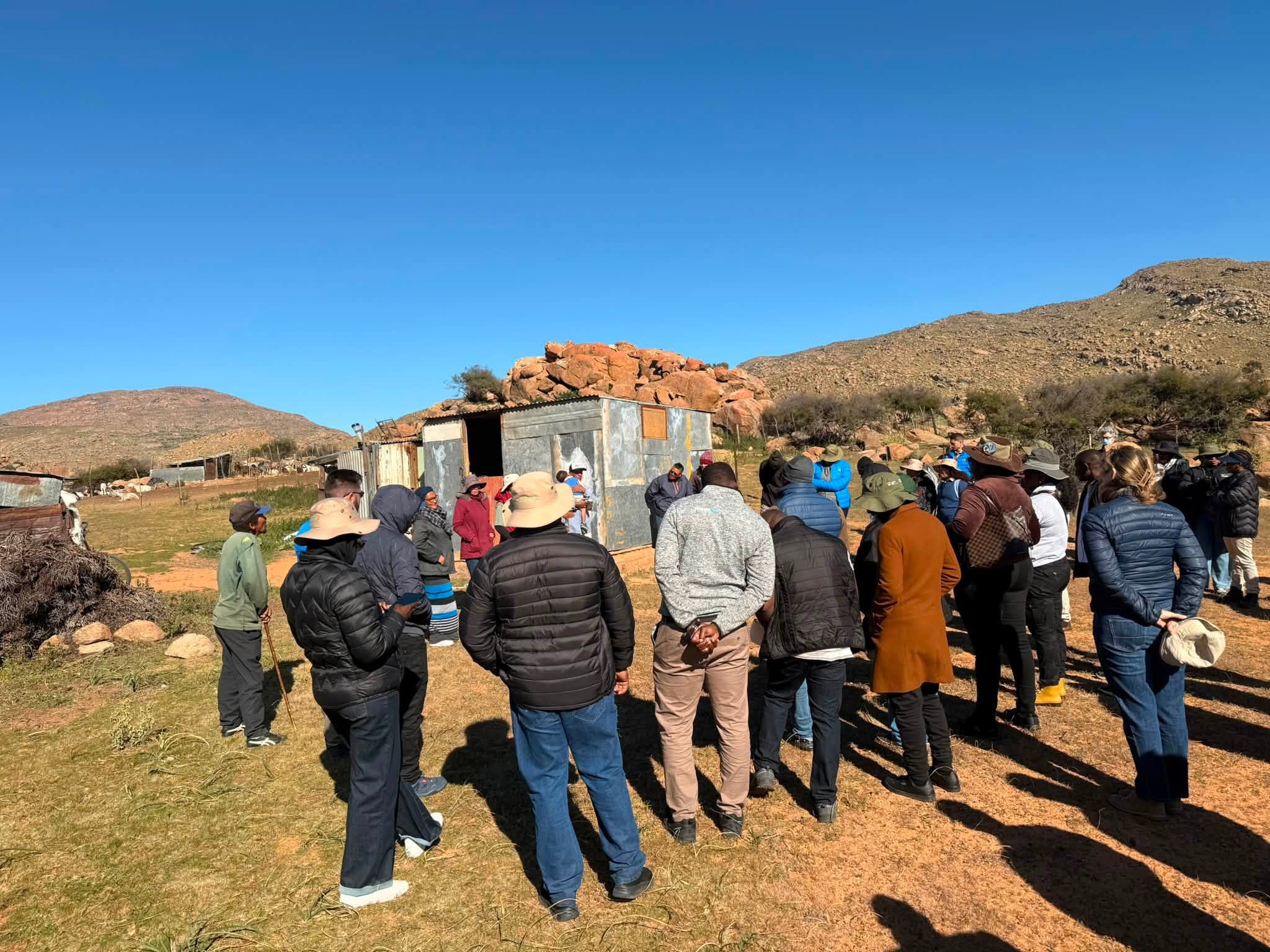
Training and continued support strengthened the members’ farming and organizational capacity, and the cooperative won its first award in 2022. Although deaths and departures reduced its membership over time, it currently has 24 members, including 15 active farmers. “Winning our first award in 2022 was an important achievement for us. It showed that our commitment and the knowledge we gained through training were beginning to produce results,” Mrs Cloete said.
The cooperative now has its own building and an ice-cream machine. Members also operate an internal microloan initiative through which they lend money to one another at 10 per cent interest. Conservation South Africa provides additional support, including medicines for sheep and goats.
“Our cooperative is not only helping us with livestock farming. We also support one another through our internal loan initiative, which gives members access to money when they need it for their farming and household activities,” Mrs Cloete said.
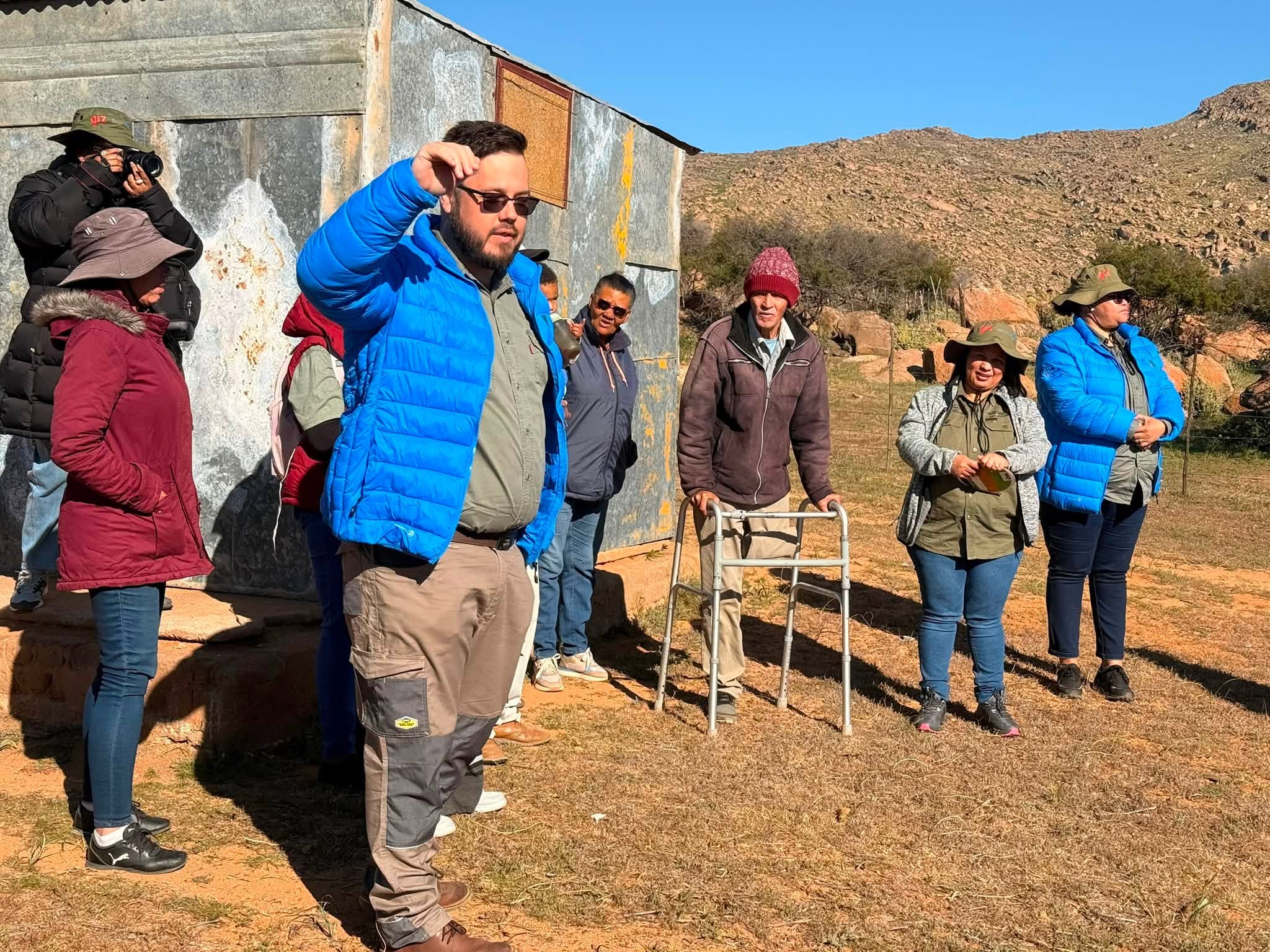
Despite the progress, livestock production in the area remains challenging. Mrs Cloete explained that producers contend with jackals throughout the year, as well as snakes. Participation in meetings during winter is also difficult because many farmers must remain at their livestock posts to care for their animals.
“Jackals are a problem throughout the year, and we also have to deal with snakes. During winter, it can be difficult for farmers to attend meetings because they cannot leave the livestock posts unattended,” she said.
Despite these constraints, market conditions have improved. Farmers can now sell their livestock through the abattoir and receive better prices than they obtained previously.
“Access to the abattoir has made a difference because farmers can now receive better prices for their animals. This gives us greater motivation to improve the health and management of our livestock,” Mrs Cloete added.
This progress illustrates how stronger market linkages can complement improved animal health and rangeland management.
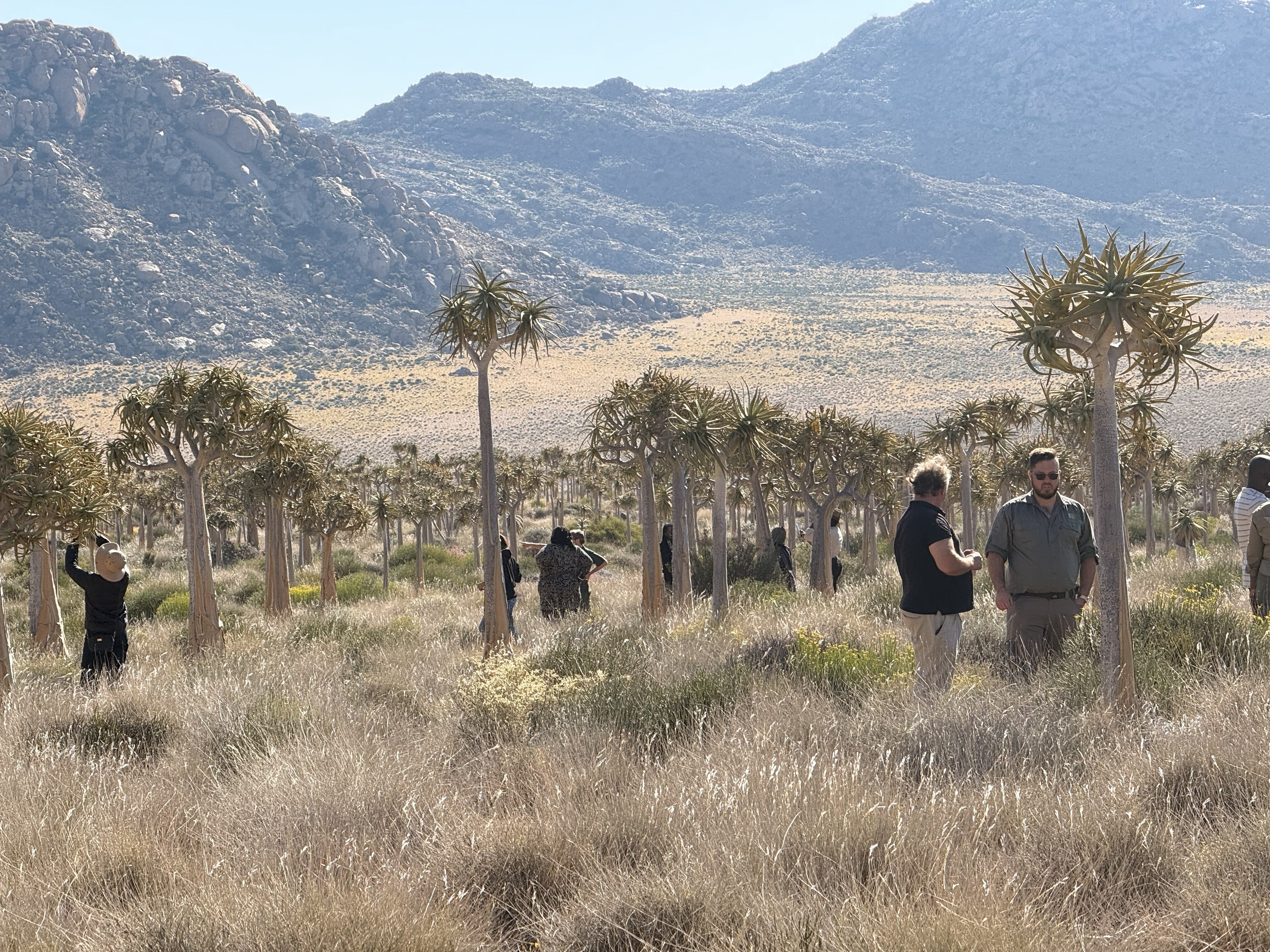
Delegates also viewed Conservation South Africa’s restoration work before traveling to the Rooifontein kokerboom or quiver tree forest. The visit enabled them to connect regional policy and program discussions with the lived realities of farmers working in a dry and climate-vulnerable landscape.
It is clear that communities must remain at the center of rangeland restoration. Lasting rangeland restoration depends on communities having the knowledge, organization, livelihood opportunities and institutional support required to manage their land and livestock together. The Nourivier experience shows what becomes possible when farmers and supporting organizations work towards a shared vision.