
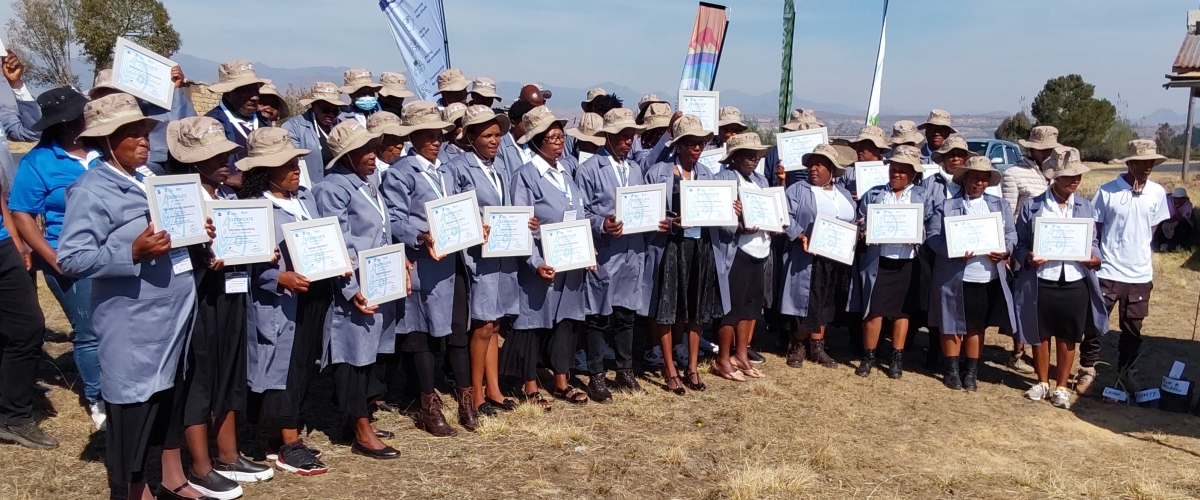
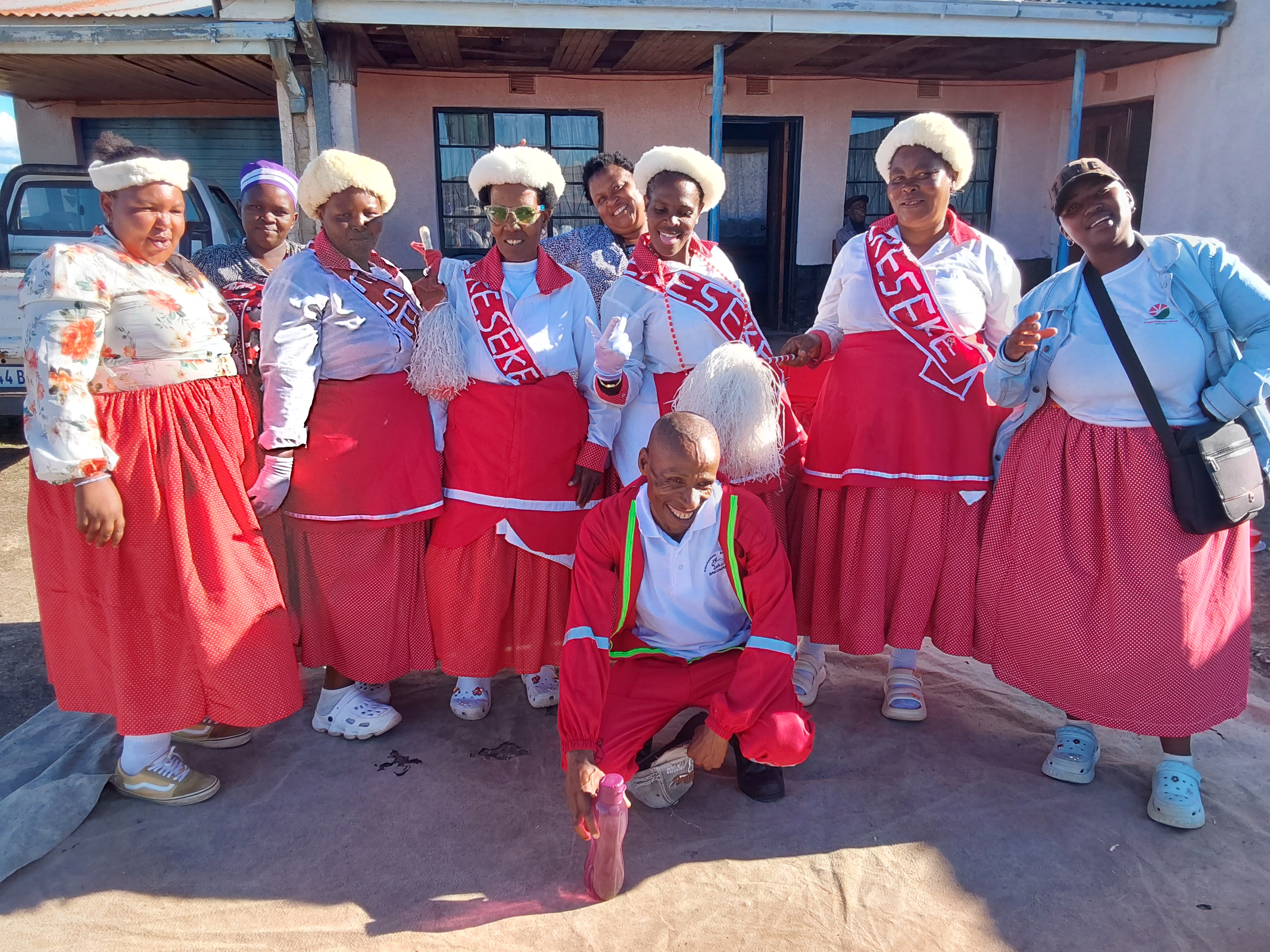
A Joint Farmer Field School (FFS) Graduation Ceremony was held at Khotsis, Mapoteng, in Berea District, bringing together FFS members from Khotsis, under Mapoteng Resource Centre in Berea, and Bokamoso Khojane, under Mahobong Resource Centre in Leribe District. The ceremony provided an opportunity to celebrate the successful completion of the Farmer Field School learning programme and to recognize the knowledge, skills, and achievements gained by the participating farmers.
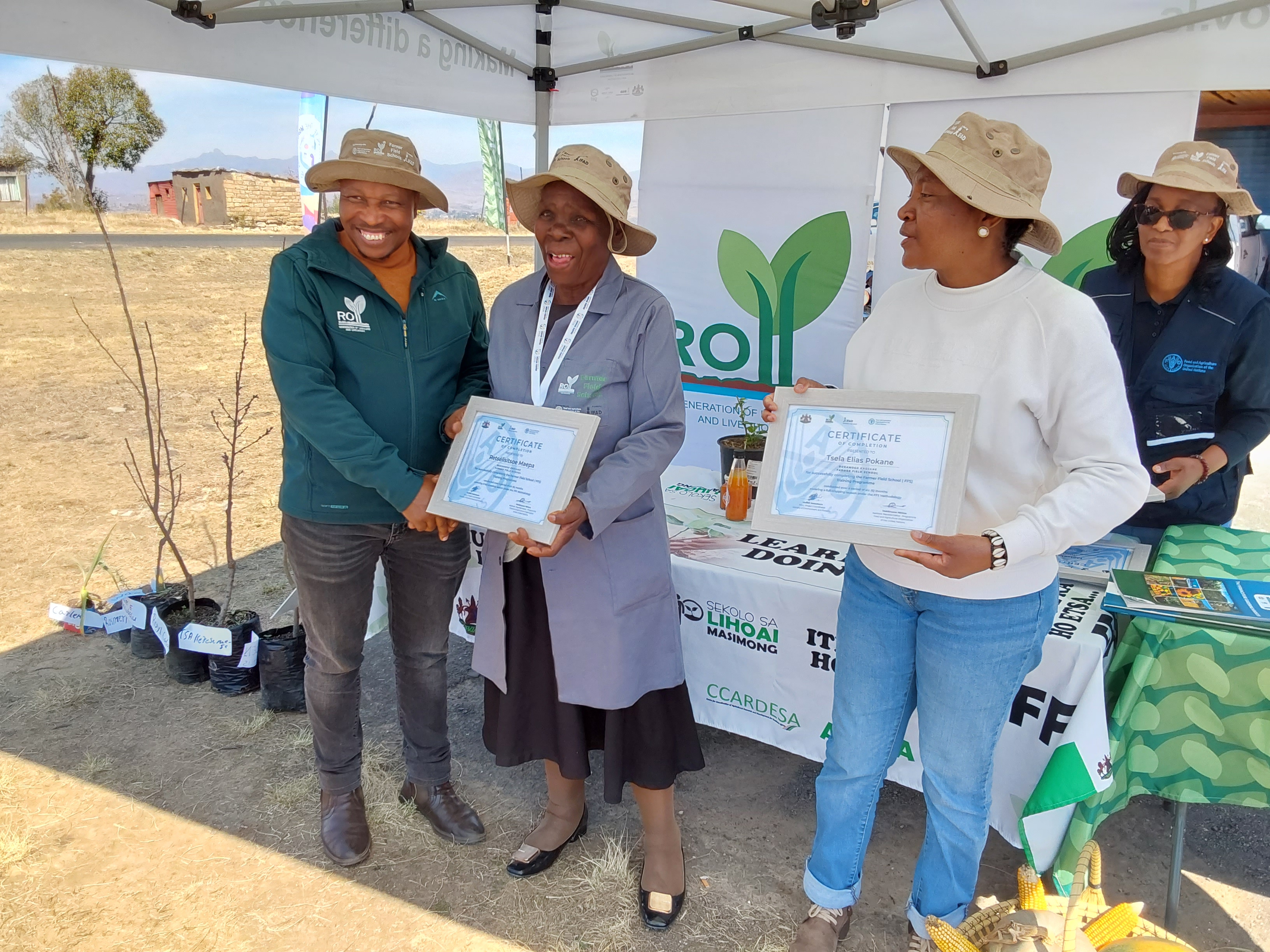
The event was graced by the District Agricultural Officer for Berea, Mrs. Malerato Lekhooa; Director of Regeneration of Landscapes and Livelihoods (ROLL), Mr. Mofihli Motsetsero; District Coordinators from the Ministry of Forestry and Environment from Berea and Leribe; Extension staff, FAO representatives, the local Chief, Councillors, and other community stakeholders.
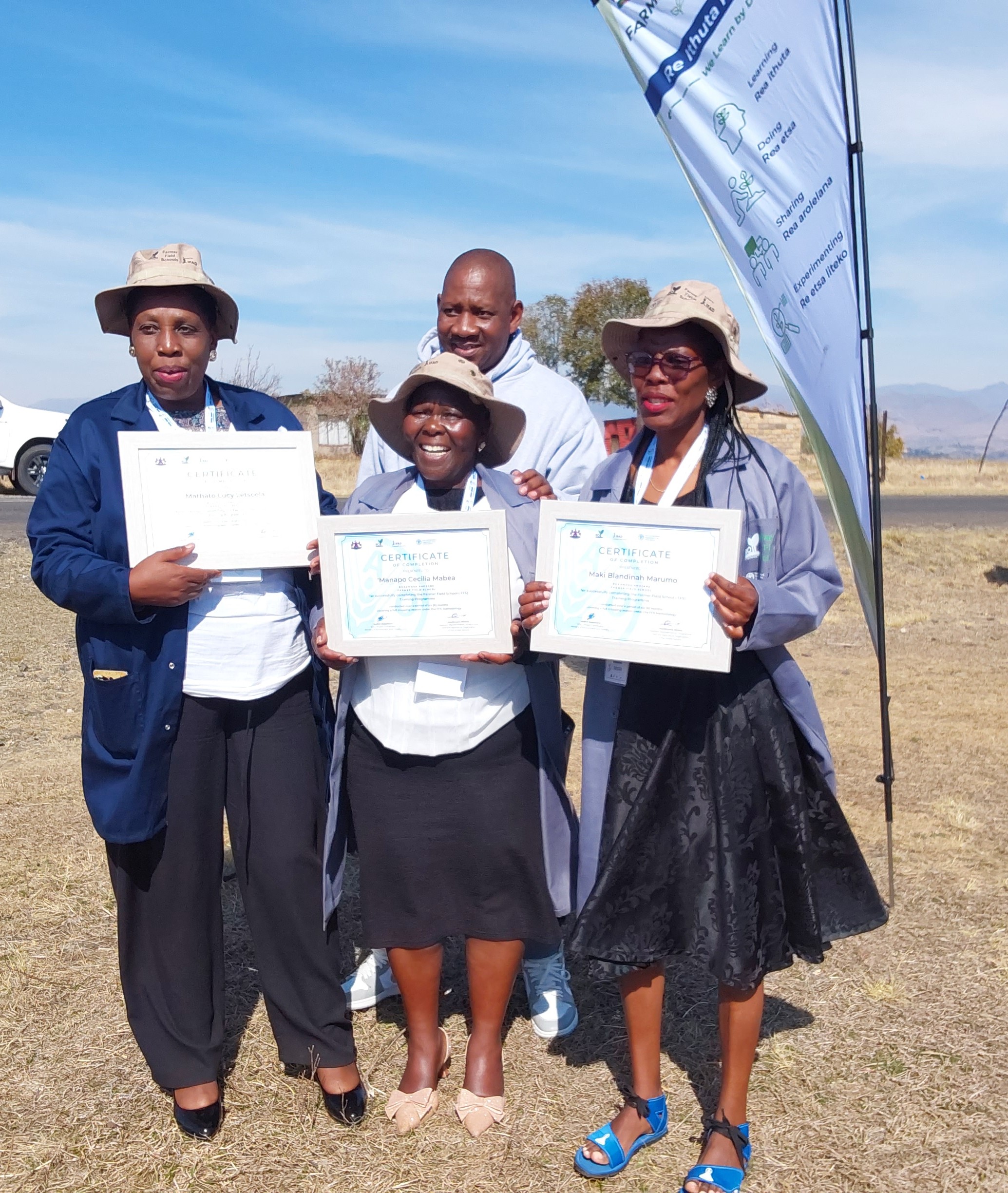
A total of 50 FFS graduates from Bokamoso Khojane and Khotsis were awarded certificates in recognition of their commitment and successful participation in the FFS programme. The joint graduation provided an opportunity for farmers from the two districts to share their experiences, achievements, innovations, and lessons learned through the FFS approach.
 |  |  |
In both locations, farmers cultivated sweet potato and soybean in their demonstration plots. Soybean was the main study crop, with FFS members conducting experiments, making observations, and sharing knowledge on different aspects of soybean production. Sweet potato was also included as an important crop, allowing farmers to broaden their knowledge and skills in crop production.
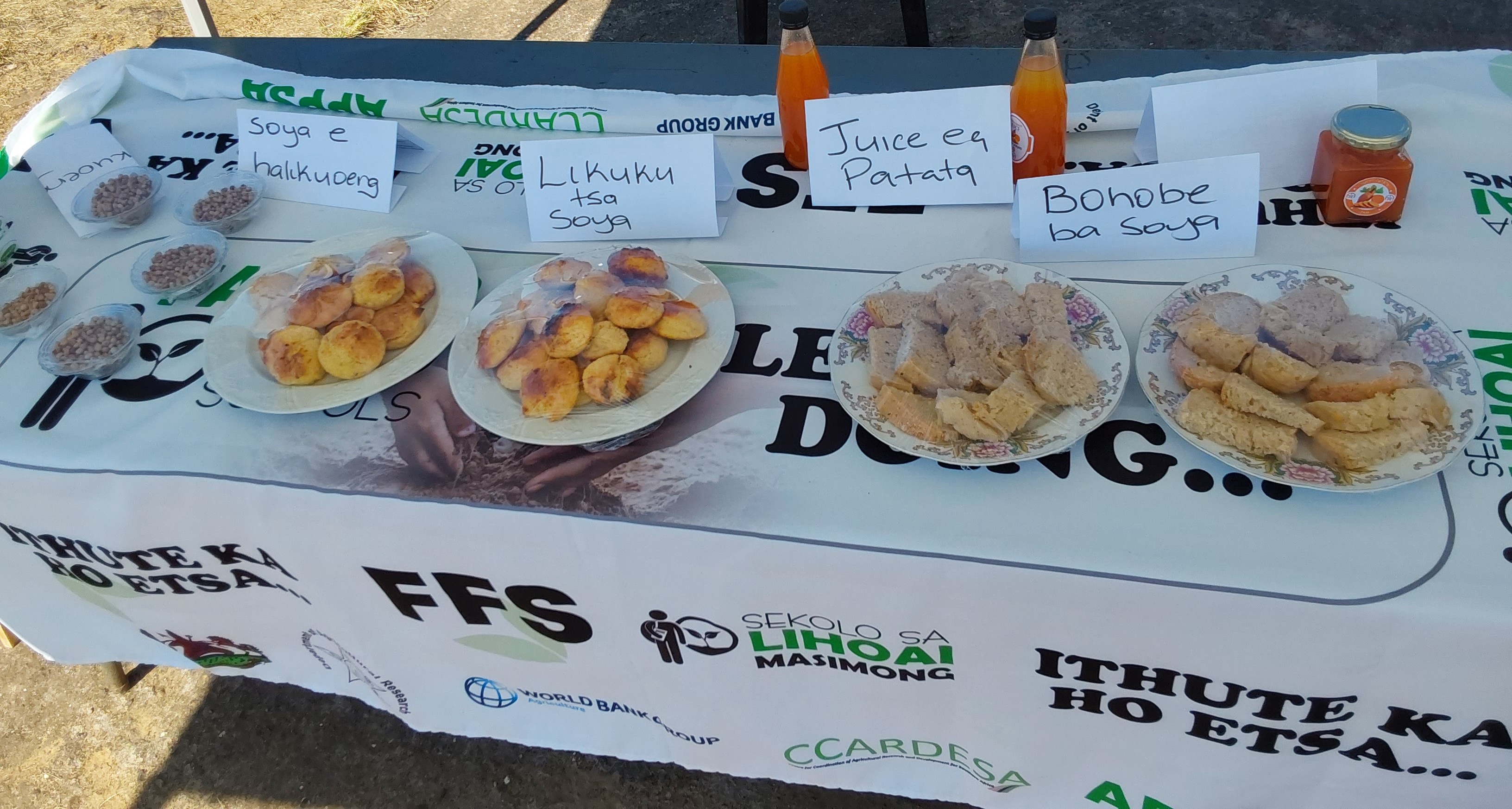
A major highlight of the joint graduation ceremony was the display and tasting of products developed from soybean and sweet potato. The exhibition demonstrated how FFS learning can go beyond crop production to promote value addition, food utilisation, nutrition, and potential income-generating opportunities for farmers.
The products displayed included snacks, milk, scones, and bread made from soybean. In addition, farmers showcased value-added products made from sweet potato, including jam and juice.
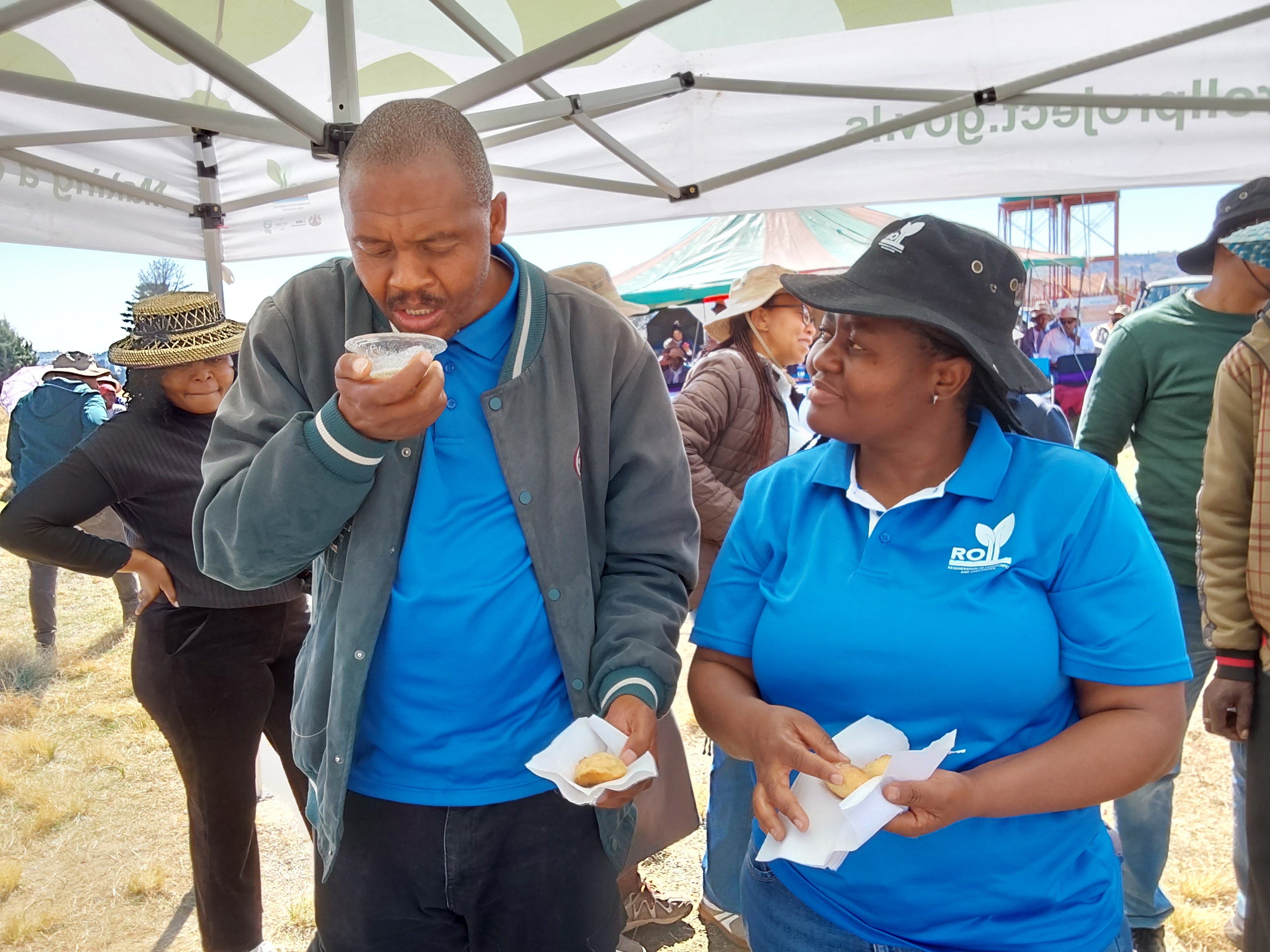
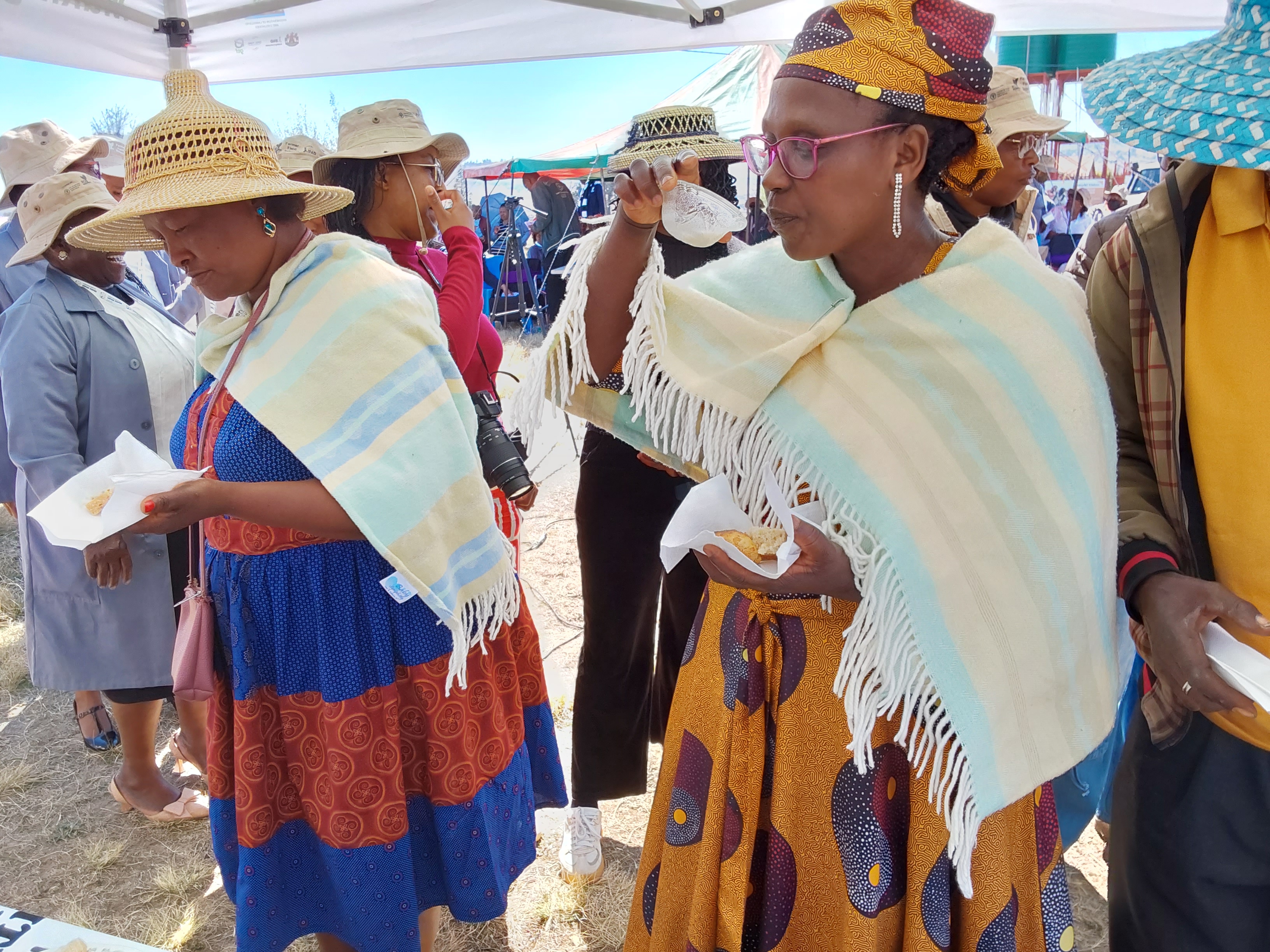
The community and guests had an opportunity to taste different products during the event. The tasting session generated interest and provided a practical platform for farmers to demonstrate the quality, variety, and potential uses of soybean and sweet potato products.
The exhibition also highlighted the potential for farmers to transform locally produced crops into different food products, thereby reducing post-harvest losses, improving household food utilisation, and creating opportunities for small-scale agribusiness and income generation.
 |  |  |
“Being part of the FFS has given us an opportunity to learn by doing. Through our demonstration plots, we have been able to test new agricultural technologies and practices, observed the results and shared what we have learned with other farmers. As a group, we were delighted to welcome visitors from St. James Primary School, students from The National University of Lesotho, and Councillors from Mphosong Constituency. Their visit showed us that the work we are doing through the FFS is attracting interest and recognition beyond our group. “We hope that more community members, schools and local leaders will visit us, learn from our experiences and help us promote improved farming practices in our community.” Said Mrs Manapo Mabea.
Mr. Mokete Lekoko, a member of Khotsis FFS and a farmer producing apple and peach tree seedlings, expressed his appreciation for the knowledge and skills gained through the Farmer Field School programme. He highlighted that learning about new crops, particularly soybean and sweet potato, has broadened his knowledge of crop production and will enable him to diversify his farming activities. He noted that incorporating these crops alongside his fruit tree seedling enterprise will create additional opportunities for food production, income generation, and improved livelihoods.
The local Chief, Mr. Mopeli Hlajoane, called on FFS members to apply the knowledge and skills gained to improve agricultural production and become champions of good farming practices in their communities. He encouraged non-FFS members to participate in similar programmes and expressed his wish to see more Farmer Field Schools established in other areas. He also appreciated the support of ROLL as the main funder, FAO, FFS facilitators, DAOs and extension officers who contributed to the success of the FFS programme. He emphasized that agricultural development requires strong collaboration among relevant ministries, development partners and most importantly, farmers.
Source: Mokhantso Morahanye