By Lineo Mabekebeke
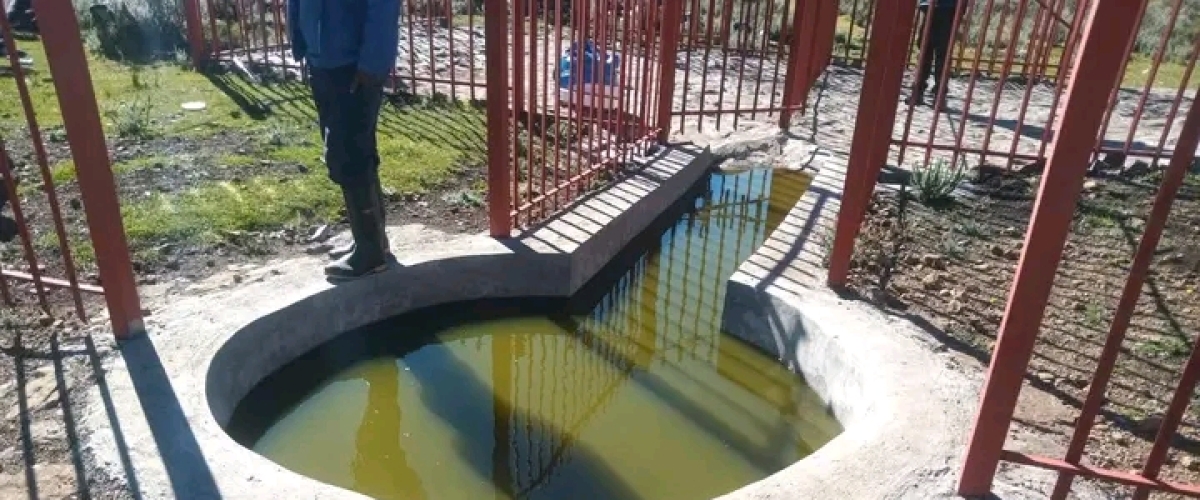
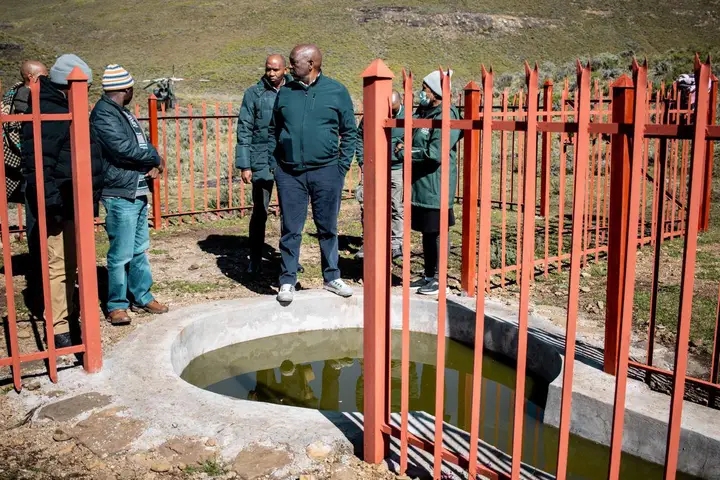
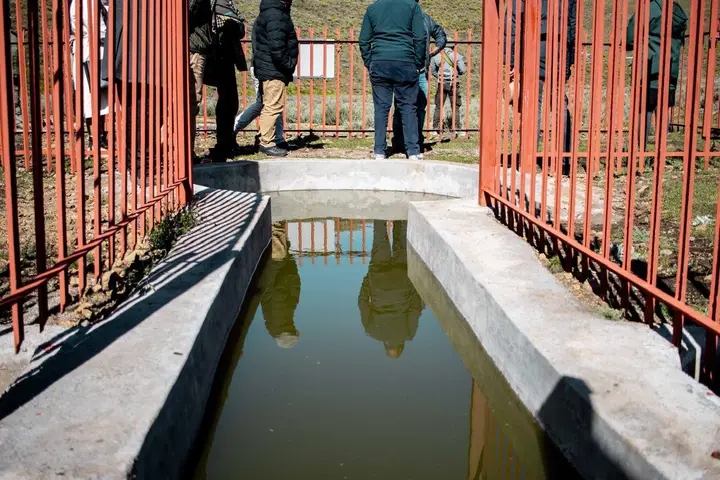
In line with its mandate to restore degraded landscapes, conserve biodiversity, and enhance livelihoods, the Regeneration of Landscapes and Livelihoods (ROLL) Project handed over a newly constructed modern small stock dip tank to members of the Makoae Wool and Mohair Growers Association in Lets’a-la-Letsie Sub-catchment, Quthing District.
The Dip tank was formally handed over by the Right Honorable Prime Minister Ntsokoane Samuel Matekane to the former Minister of Agriculture, Food Security and Nutrition, Honorable Thabo Mofosi, as the custodian ministry responsible for livestock management in Lesotho. The dip tank is constructed at a carefully selected, environmentally appropriate location, ensuring the continued provision of essential animal health services to local farmers while eliminating risks to sensitive wetland ecosystems and downstream communities.
Speaking at the handover ceremony, the Prime Minister, Honorable Ntsokoane Samuel Matekane, said the newly commissioned dip tank in Quthing District will be a game-changer for wool and mohair production, one of Lesotho’s key agricultural sectors. He said healthy animals produce quality wool and mohair, so giving farmers access to proper dipping facilities is a direct investment in higher yields, better market prices, and improved livelihoods for rural communities in Quthing and beyond. He further explained that the dip tank forms part of broader government efforts to modernize the livestock sector and strengthen Lesotho’s competitiveness in the global wool and mohair market.
Beyond animal health, the Prime Minister highlighted the environmental link to sustainable farming. Through the ROLL Project, he said, government will roll out community outreach programs to train farmers and herders on advanced rangeland management and environmental preservation techniques. “Overgrazing and land degradation threaten both our environment and our wool industry. This sensitization drive will equip communities with knowledge to restore grazing lands, manage water sources, and adopt climate-smart practices. The benefits will be felt not only by individual farmers, but by entire communities and the national economy,” he added.
Honorable Matekane reaffirmed government’s commitment to supporting rural farmers, noting that stronger livestock health, environmental stewardship, and skills development are critical pillars for achieving food security, job creation, and poverty reduction in Lesotho.
Former Minister of Agriculture, Honorable Thabo Mofosi, expressed his gratitude to the ROLL Project for funding and implementing the dip tank, describing it as a timely investment in rural development. “This dip tank is more than just infrastructure. It is a tool that will improve animal health, increase wool and mohair quality, and put more money in farmers’ pockets. The whole community stands to benefit,” Honorable Mofosi explained.
He added that the impact will go beyond livestock. Government will partner with the Ministry of Agriculture, Ministry of Forestry, and other relevant departments to roll out training on livelihood skills. These will include sustainable rangeland management, wool classing, basic business skills, and climate-smart farming practices. “Our goal is not only to dip sheep,” he noted. “We want to build resilience. When farmers have the right skills, they can diversify their income, withstand drought, and pass knowledge to the next generation. That is how we strengthen lives and secure the future of our communities.”Honorable Mofosi reaffirmed that collaboration between ROLL, line ministries, and local leaders will be key to ensuring the project delivers lasting results for Quthing and for Lesotho as a whole.
ROLL project manager Mr Mofihli Mots'ets'ero emphasized that their mandate goes beyond policy, working hand in hand with communities to raise awareness of the critical role that the environment and natural resources play in everyday life. Mr Mots'ets'ero noted that many communities depend directly on land, water, and forests for survival. He stressed that environmental conservation is not just about preserving nature for its own sake, indicating that a healthy environment creates jobs through eco-tourism, sustainable agriculture, and rangeland restoration projects. It also reduces the spread of pollution- and land-degradation-linked diseases, leading to healthier families and lower healthcare costs.
“We are committed to seeing Lesotho’s environment restored and protected. When rangelands are well-managed, livestock thrive. When water sources are clean, communities thrive. And when people understand this link, they become champions of their own development,” he added. He concluded by calling for stronger partnerships between government, local leaders, and citizens, noting that long-term environmental stewardship will drive job creation, food security, and improved public health across the country.
The dip tank will be used by the Makoae Wool & Mohair Growers Association to support improved animal health and sustainable livestock management at the community level.
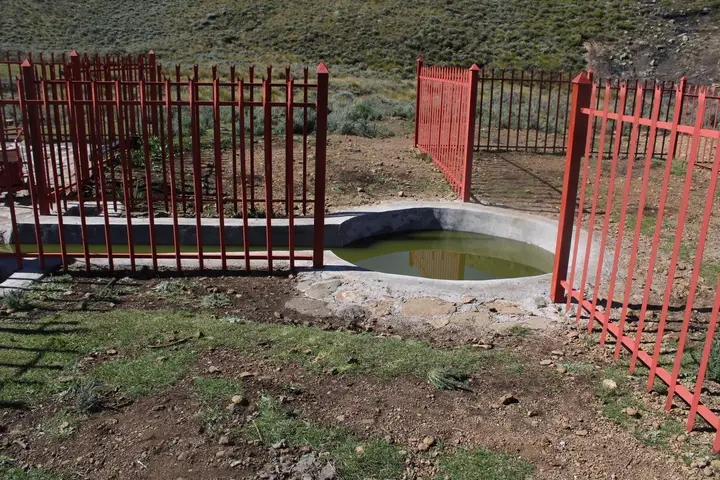
The newly constructed animal dip tank replaces an old one that posed a significant threat to biodiversity within the Letsa-la-Letsie wetland. In previous years, contamination from the animal dip tank contributed to high mortality rates among wetland bird populations, with approximately 45 bird species affected by poisoning linked to chemicals entering the stream, highlighting the urgent need for intervention.
The author is a Reporter/Journalist from Lesotho Television and a CCARDESA media correspondent