
By Rethabile Nchee
The Ministry of Environment and Forestry in Lesotho commemorated World Soil Day in Maseru on 5 February 2026. Globally, World Soil Day is celebrated annually on 5 December; however, Lesotho observed it later due to competing national activities on the original date.
The 2025 theme, “Healthy Soils for Healthy Cities,” emphasized the importance of protecting urban soils from sealing, reducing flood risks, mitigating urban heat, supporting urban agriculture, and promoting sustainable planning for more resilient and healthier cities.
Soil plays a critical role in urban environments. It provides the foundation for buildings, roads, and other infrastructure while also sustaining green spaces that contribute to healthier, more livable cities. The 2025 World Soil Day theme highlighted the need to balance urban development and the conservation of soil resources. The One Health approach further reminds soil users that healthy soils are essential for the well-being of people, animals, plants, and the broader environment.
Soils remain the foundation of life. They sustain 95% of the world’s food production and nearly all life on land. Yet soils are among the most vulnerable natural resources, increasingly threatened by land degradation caused by poor land management practices. This underscores the urgent need to protect soil resources and integrate soil management into national policies, development strategies, urban planning, and climate resilience frameworks.
The celebrations began with a march around Maseru city to raise public awareness about the importance of soil conservation. The march was led by the Lesotho Defence Force (LDF) Band, attracting participation from government officials, stakeholders, and members of the public.
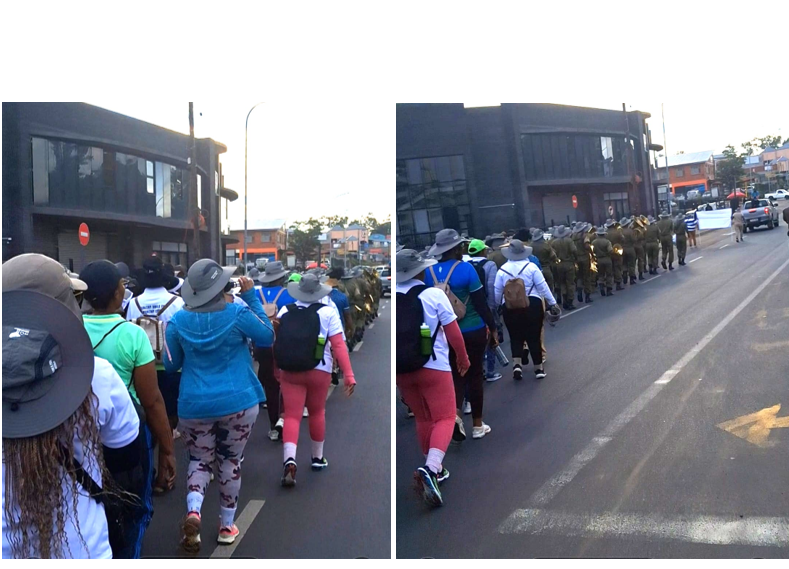
Marching for World Soil Day
One of the key activities of the day was an educational demonstration on soil profiles. Mr. Polao Moepi, Principal Soil Scientist from the Ministry of Environment, explained that a soil profile consists of several layers known as horizons. These horizons are important for determining soil fertility for agriculture and assessing soil suitability for construction and other land uses.
He further explained that soil formation is influenced by five key factors: climate, organisms, topography, parent material, and time. Understanding these factors is essential for effective soil management and sustainable land use planning.
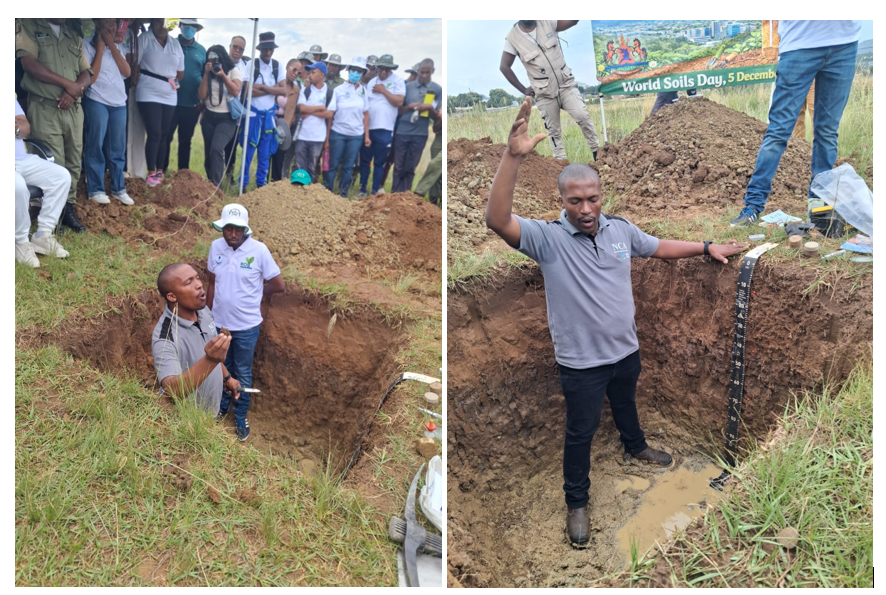
Mr. Polao Moepi and Mr. Selebalo Ramakhanna demonstrating and explaining the soil profile.
The Director of the Department of Forestry, Mr. Nkuebe, noted that World Soil Day is observed globally under the guidance of the Global Soil Partnership (GSP), an initiative of the Food and Agriculture Organization of the United Nations (FAO).
Through platforms such as the FAO Global Soil Partnership (GSP) and the African Soil Partnership (AfSP), Lesotho has received technical and financial support to implement a Technical Cooperation Programme (TCP) project aimed at developing the Lesotho Soil Information System (LESIS).
LESIS supports the implementation of land management programmes and facilitates research on soils, climate, agriculture, and food security. It serves as an important national tool for evidence-based decision-making and contributes to advancing Lesotho’s commitments under the Land Degradation Neutrality Target Setting Programme (LDN-TSP) and the National Strategic Development Plan II (NSDP II Extended).
Mr. Nkuebe emphasized that sustainable urban development cannot occur without a clear understanding of soil resources. He cautioned that planning processes that ignore soil characteristics, limitations, and risks are inconsistent with good governance, sustainable development, and Lesotho’s national and international commitments.
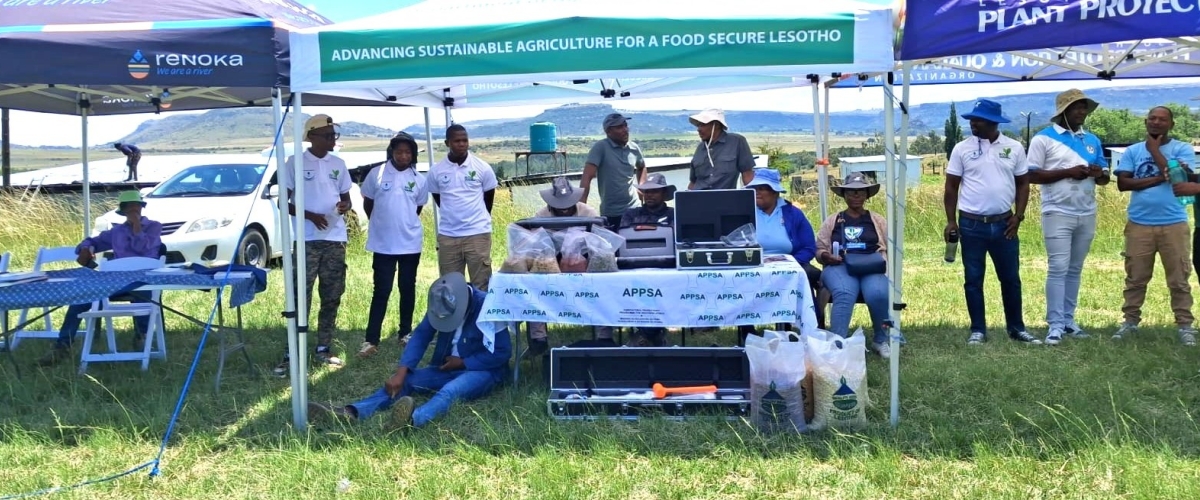
As is customary during World Soil Day celebrations, a variety of activities were organized, including awareness campaigns, stakeholder presentations, and exhibitions by different government departments and partners. These activities highlighted the critical role of healthy soils in urban resilience, disaster risk reduction, food and water security, climate adaptation, and sustainable economic development.
The Honourable Minister of Environment, Forestry and Range Resources, Mr. Letsema Adontši, delivered the keynote address of the day. In his remarks, the Minister commended the Ministry and its partners for successfully organizing the event. He reaffirmed Lesotho’s commitment to the global call to recognize soil as a living resource that must be protected, measured, and sustainably managed for present and future generations. He further emphasized that soil is fundamental to Lesotho’s food security, water regulation, climate resilience, and economic development.
The Minister reiterated the Government of Lesotho’s commitment to evidence-based land and soil management, noting that effective land-use planning begins with understanding soil capabilities and limitations. This knowledge helps guide decisions on where to farm, build, and develop infrastructure sustainably.
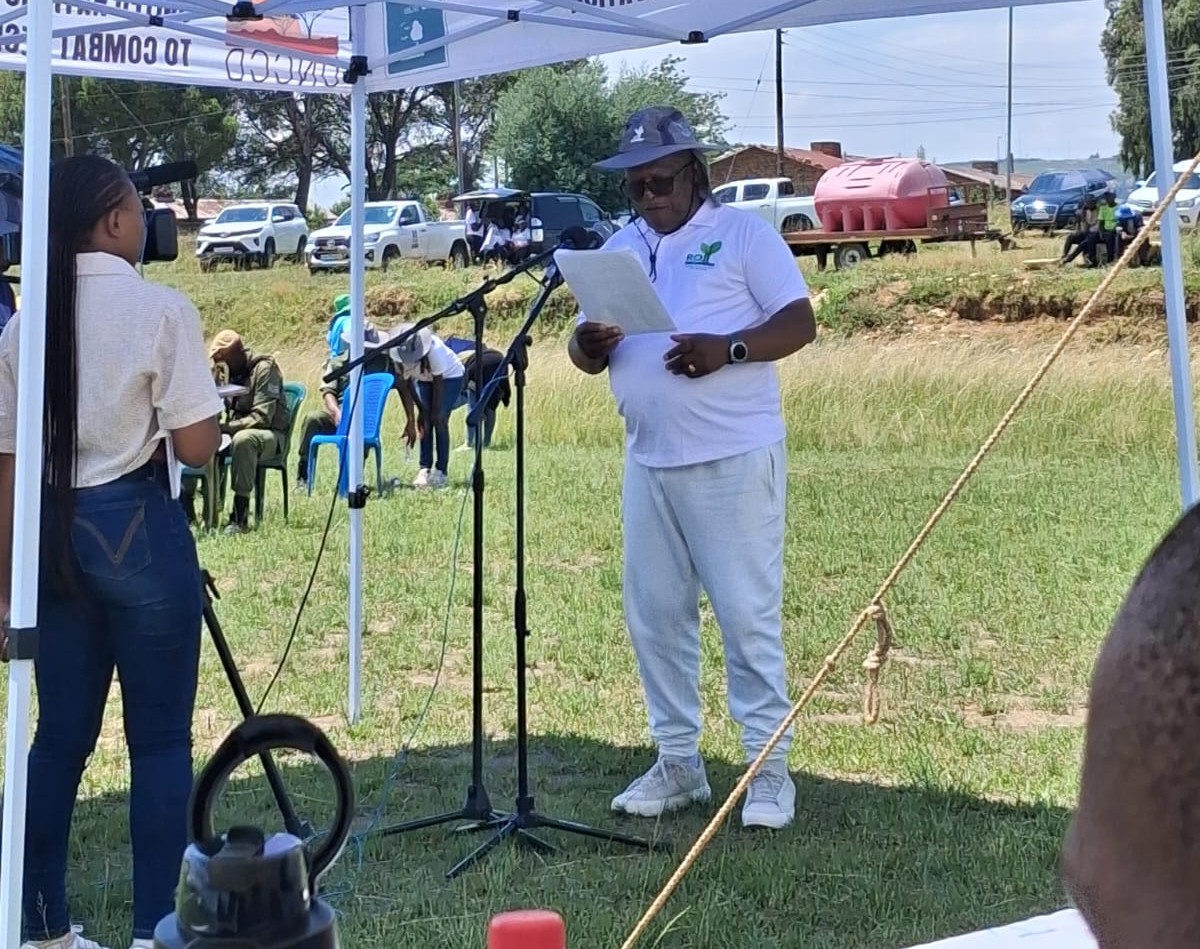
The Honourable Minister of Environment, Forestry and Range Resources, Mr. Letsema Adontši.
He also highlighted the importance of the Lesotho Soil Information System (LESIS) as a national platform that brings together government departments, research institutions, academia, and development partners to strengthen soil data integration, land capability assessments, and environmental safeguards within national and local planning frameworks.
In closing, the Minister called upon all stakeholders, including farmers, researchers, NGOs, planners, the private sector, and government institutions, to actively participate in protecting Lesotho’s soil resources.
He stressed that soil conservation is not the responsibility of a single sector but a shared national responsibility.
“To care for our soils is to care for our people, our climate, and our future.”
— Hon. Letsema Adontši
The author, Rethabile Nchee, is the Chief Research Officer at the Ministry of Agriculture and Food Security and serves as the CCARDESA Information, Communication and Knowledge Management (ICKM) Focal Point for Lesotho.