By Felix Mothatego,
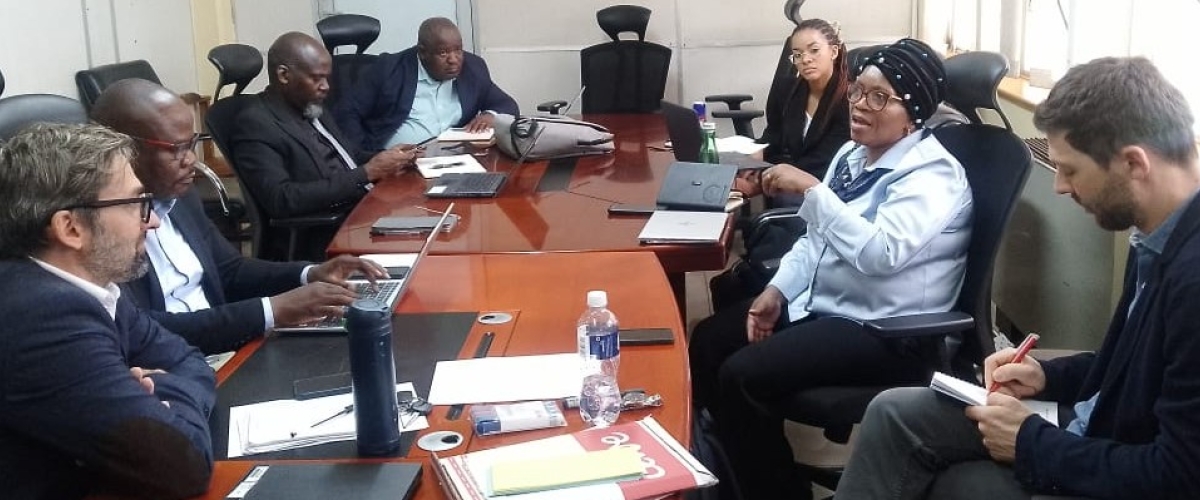
Policy-development for improved joint management of communal areas is a key focus area for the Growing Greener project. This was highlighted during the mid-term review of the project titled Restoration and Sustainable Use of Agro-Pastoralist Systems in Open Arid Landscapes across Southern Africa – Growing Greener, held recently at the Ministry of Lands and Agriculture in Gaborone. The project is financed by the German Government through the International Climate Initiative (IKI).
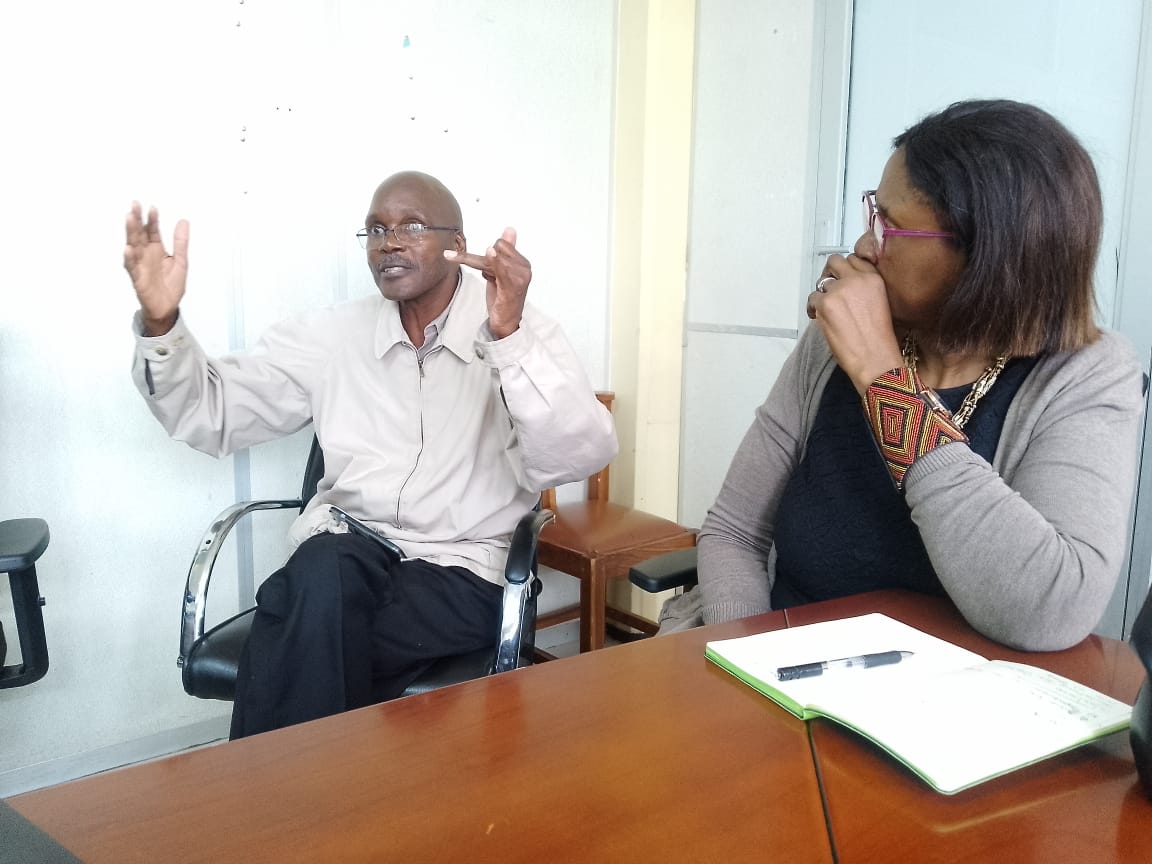
Deputy Country Director of Conservation International (CI) Botswana, one of the project's implementing partners, Mr. Nkobi Moleele, said the project’s policy component is critical to strengthening ongoing discussions and improving how interventions are implemented. He explained that most project activities take place on communal grazing lands, which are managed by Land Boards rather than by local communities.
As a result, individuals are free to rear large herds, sometimes more than 300 cattle, without restriction. While this benefits the individual, it places strain on shared resources and ultimately affects the entire community, including those with smaller herds.
Mr. Moleele emphasized the need to empower communities to protect the interests of those participating in the project so that collective benefits can be realized. He noted that closer collaboration with Land Boards, alongside community consultations, could create room for the development of recognized by-laws to regulate grazing practices.
He further highlighted national concerns about the declining cattle population, which currently stands at around 1.5 million. Challenges such as Foot and Mouth Disease (FMD), human-wildlife conflict, and degraded rangelands have also contributed to a decline in livestock quality.
According to Mr. Moleele, the project is well-positioned to address these issues. Improving livestock management through the Herding for Health model, he said, could help control FMD and reduce human-wildlife conflict, while healthier ecosystems would support the recovery of cattle numbers and quality.
Drawing from personal experience in northeastern Botswana, Mr. Moleele noted that many farmers had previously neglected basic livestock management practices such as herding and kraaling. When vaccination campaigns were introduced, some farmers were unable to gather their cattle, which had effectively become feral. As a result, unvaccinated animals were culled, leading to significant losses.
He said this experience has highlighted the importance of proper animal husbandry, adding that the Herding for Health model promotes better livestock care, increase biosafety and improved rangeland management.
CI Botswana Country Director, Ms. Portia Segomelo, said the project can only influence government policy by identifying gaps and advocating for reforms that create an enabling environment. She stressed the importance of aligning project activities with government programs and ensuring active farmer participation, particularly in rangeland restoration and rotational grazing.
Ms. Segomelo added that sustainability is a key focus, with efforts aimed at ensuring long-term impact beyond the project’s lifespan. However, she acknowledged that cultural practices can sometimes pose challenges. In Botswana, approaching someone’s cattle herd is a sensitive matter, as livestock are central to livelihoods and cultural identity.
Farmers may resist practices such as combining herds into a single kraal, partly due to traditional beliefs and rituals associated with livestock care. Nevertheless, she said the project is working to encourage behavioral change by demonstrating the broader benefits of collective approaches to addressing national challenges.
“At the end of the day, farmers need to understand that these interventions directly affect their livelihoods,” she said.
Ms. Segomelo noted that implementation agreements have already been signed, and engagement at the village level has been intensive. Communities are encouraged to take ownership of the Herding for Health model and use their indigenous knowledge to guide its application, including identifying environmentally sensitive areas.
This participatory farmer-centric approach, she said, is also helping to bring skeptical farmers on board, even as the project team acknowledges that it does not have all the answers.
Project evaluator Mr. Jonathana Steike of Arepo Consultancy in Berlin said the mid-term review aims to assess progress as the project reaches its halfway point. The evaluation focuses on identifying successes, areas for improvement, and aspects of the approach that may need adjustment as circumstances evolve.
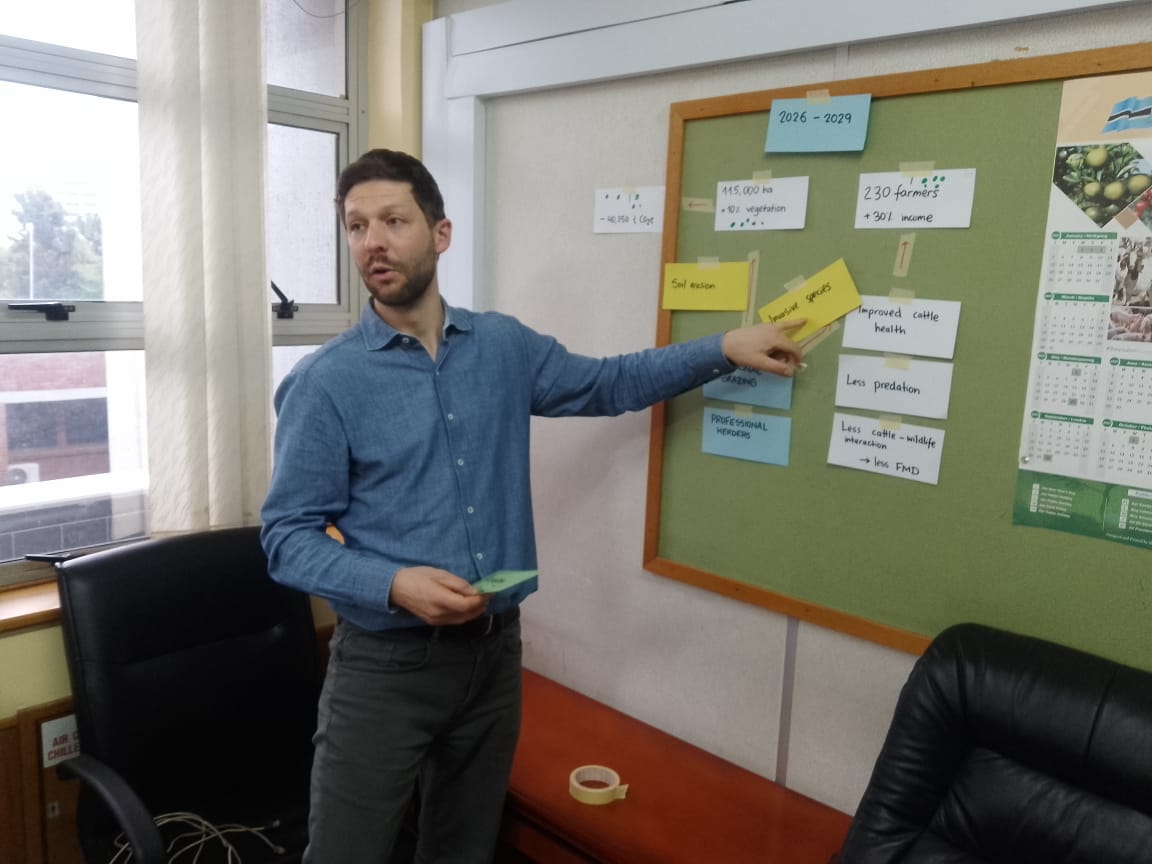
He explained that the review examines three key areas: what can realistically be achieved, potential risks to the project, and strategies to mitigate those risks. With only three years remaining, the goal is to ensure the project stays on track to meet its objectives.
Meanwhile, Project Manager Mr. Martin Leineweber of Deutsche Gesellschaft für Internationale Zusammenarbeit (GIZ) said both GIZ and CI are seeing positive progress as project components begin to align.
The project is also being closely aligned with the project called Ecosystem-Based Adaptation and Mitigation in Botswana’s Communal Rangelands, a joint project by Governament of Botswana with co-funding from the Green Climate Fund (GCF).
Mr. Leineweber said preparations are also advancing for the project launch in NG8, with groundwork already underway in Nokaneng, Gumare, Tubu, and Habu. The aim is to ensure alignment between CI’s rollout efforts and GCF processes.
Although the project officially began in 2023 across four countries, Botswana experienced delays due to administrative processes involving both the German government and the Government of Botswana. The exchange of notes and the government transition in 2024 also contributed to the postponement of implementation.
However, Mr. Leineweber expressed optimism that strong government support for the Growing Greener project will help recover lost time over the remaining three years.
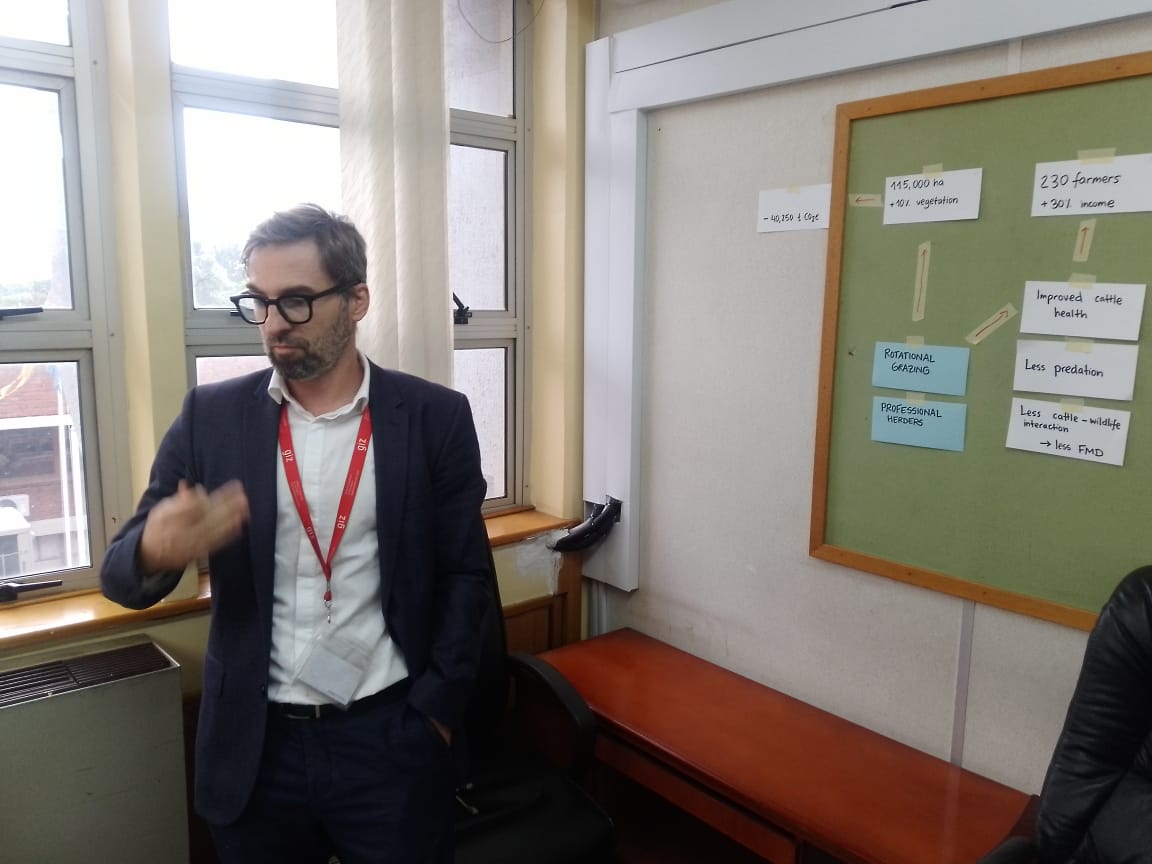
Deputy Director of Animal Production at the Ministry of Lands and Agriculture, Mr. Onkemetse Mathemabe, said the ministry is particularly interested in the project’s outcomes, especially in relation to land restoration.
He noted that the issue is being taken seriously, especially given that the project is fully funded by the Governament of Germany through the IKI. However, he acknowledged that the ongoing FMD outbreak presents a significant challenge.
He further explained that Botswana’s economic transformation agenda aims to reduce the country’s high import bill, particularly as diamond revenues decline. Agriculture, he said, is expected to play a central role in ensuring food security, creating jobs, and improving livelihoods.
“In rural areas, agriculture is everything,” he said. “If communities are severely affected, it undermines our progress toward becoming a food-secure nation.”
The author is a Sub-Editor under the Corporate Services Department in the Ministry of Lands and Agriculture (HQ) in Botswana